

In a world where images are created in seconds and forgotten just as quickly, a handcrafted print plays by different rules. Confluence Handcrafted Photo Prints Experience 2026 in India offers a deliberate contrast and brings photography back to its physical and handcrafted roots.
From 28 to 31 May 2026, the Karnataka Chitrakala Parishath in Bengaluru – a Gallery, Museum and College of FineArts – became a meeting point for artists and audiences. Over 60 handcrafted prints by six artists show how much time, care and material go into analogue and alternative printing processes.
An Exhibition That Invites You to Pause
Confluence is not just an exhibition. It is an invitation to see images in a new way. Each print is unique, created through repeated manual steps using chemistry, light and patience. The works encourage you to slow down and engage with details that are often lost in everyday digital life.
The participating artists – Debanjan Das Gupta, Raghavendra Udupa, Rajkumar Krishna, Ramesh Adkoli, Sabir Ahmed and Shankar Kiragi – bring together diverse perspectives, techniques and themes. Together, they create a rare and compelling range of expression within alternative photography.
Alternative Printing Processes – Photography as a Physical Practice
A key part of the exhibition is the range of alternative printing methods. These processes span more than 150 years of photographic history.
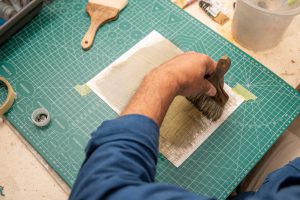
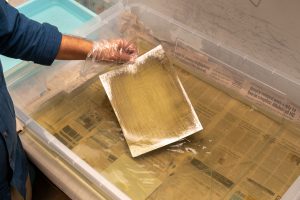
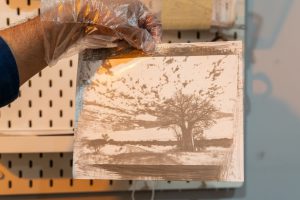
Unlike digital photography, these works are made through direct interaction between light, chemistry and material. Artists coat paper by hand. They place negatives or objects onto the surface. Then they expose the work to UV light and develop it in several stages.
There are two main approaches:
Pigment-based processes
These include gum printing. Artists build up images in layers. The results often feel painterly and tactile.
Chemical processes
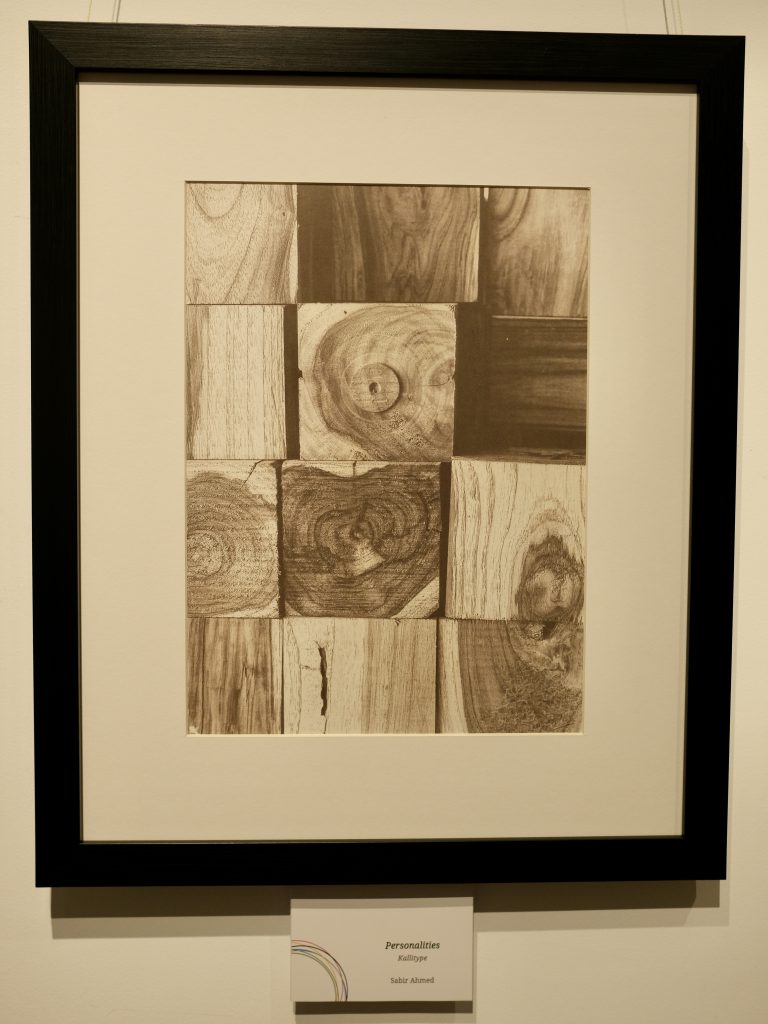
These include cyanotype, kallitype, salt prints and silver gelatin. Here, the image forms through light-sensitive chemical reactions.
Many artists combine techniques. They tone, layer and rework their prints. This creates depth and allows for a degree of unpredictability.
Paper as a Creative Foundation
Paper is often overlooked, yet it plays a crucial role in these works. It does more than carry the image. It actively shapes how the final print looks and feels. The exhibition deliberately uses high-quality, archival fine art papers. These support the handcrafted nature of the processes.
Some works are created on Hahnemühle Lanaquarelle. This classic watercolour paper works particularly well for hand-coated techniques. Its textured surface absorbs emulsions evenly and enhances the organic, expressive quality of the image.
The exhibition also highlights how important the right paper choice is for alternative processes. Materials must be chemically stable. At the same time, they need to hold subtle tonal values.
This is where Hahnemühle Platinum Rag comes into play.
While it is not used for every work on display, it is widely considered an excellent choice for many of these alternative processes and techniques, including kallitype, cyanotype and palladium printing. Its matt surface, high purity and stability create ideal conditions for precise results and rich tonal depth.
This reliability becomes especially important in complex, multi-layered processes. The paper supports the work without drawing attention to itself. It remains a quiet but essential factor in the quality of the final print.
Between Tradition and Innovation
What makes Confluence special is its balance of history and experimentation.
The exhibition features classic techniques such as:
- Cyanotype, known for its deep blue tones
- Salt printing, with its soft and warm appearance
- Kallitype, offering rich brown and black tones
Alongside these, newer developments appear. One example is FerroBlend, a recent process that combines dual-tone effects.
This mix shows that alternative photography is not just about the past. It continues to evolve.
A Return to Thoughtful Image-Making
Confluence 2026 is more than a showcase. It is a statement.
In a fast-moving visual culture, it reminds us that photography can take time. Time to create. Time to observe. Time to understand.
The combination of craftsmanship, experimentation and material quality makes this exhibition a compelling experience. It speaks to photographers, artists and anyone interested in a deeper way of seeing.
Those who take the time will discover not only new visual approaches, but also a different relationship with images. Slower. More deliberate. And more lasting.


Thank you for covering nicely with kind words.
Much appreciated.
We enjoy practising the art and sharing it.