

Hi Cheng, thank you very much for taking the time to talk to us! We are delighted to feature you in our new blog interview and to learn more about your creative journey.
First, please briefly introduce yourself and your personal background. Who are you, what are you passionate about, and how have these passions led you to where you are today?
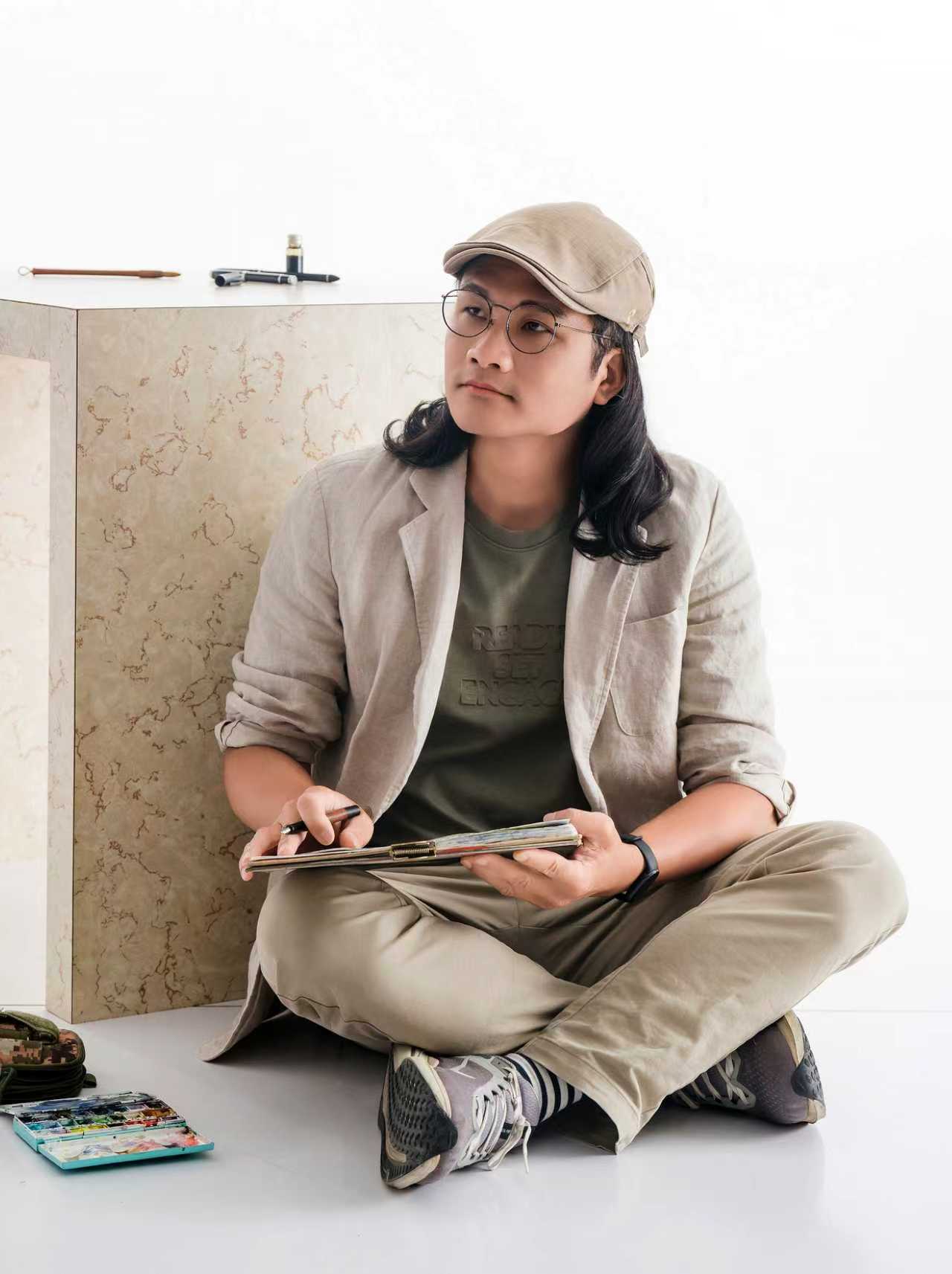
Hello, I’m Cheng Kai-Hsiang. I live in Pingtung, Taiwan. I’m a painter and also an author. In 2013, I came across the creative lifestyle advocated by “Urban Sketchers”. The attitude they promote and their diverse styles deeply moved me. From that point on, it was as if a whole new world opened up for me. I realized that everything around us could be turned into a painting. As I walked down the street, I started observing details in search of subjects, and in doing so, discovered many interesting scenes in the city.
For me, painting allowed me to rediscover the city, fall in love with it, and then realize that the city’s memories were disappearing quickly. So I began combining painting with writing to document things, and later made this documentation the main focus of my creative work, using publications to accumulate my works and share my creative philosophy.
How would you describe your style, and how has it evolved over time? Have specific influences shaped your style?
In my early days, I went through formal art training, so I’ve painted still lives and plaster casts. But during my studies and my time in military service, I wasn’t yet a professional painter, so I never really thought about style. Besides, my teachers never talked about what “creative work” meant. For me back then, painting was just a childhood hobby, without a clear goal.
In 2013, I encountered Urban Sketchers, and that truly changed my painting habits. By then I had become a full-time creator. Over the past ten years, I’ve constantly searched for subjects that represent me and asked myself what I want my work to convey. After writing and publishing books like *Street House Taiwan* and *Hundred Stalls Taiwan*, I came to understand that creativity comes from life. You need to stay in a place for a longer time, connect with it, and only then can you see the extraordinary in the ordinary.
But these fleeting moments in daily life are easily overlooked. I’ve always felt a need to speak up for these “small things.” So “carrying a sense of ‘reluctance to let go’ to document the ordinary little things in daily life” became the core spirit of my work. And because I am both a painter and an author, I’ve come to call myself an “urban observation painter,” moving from city to city and creating as I go.
Could you tell us about the books you’ve published?
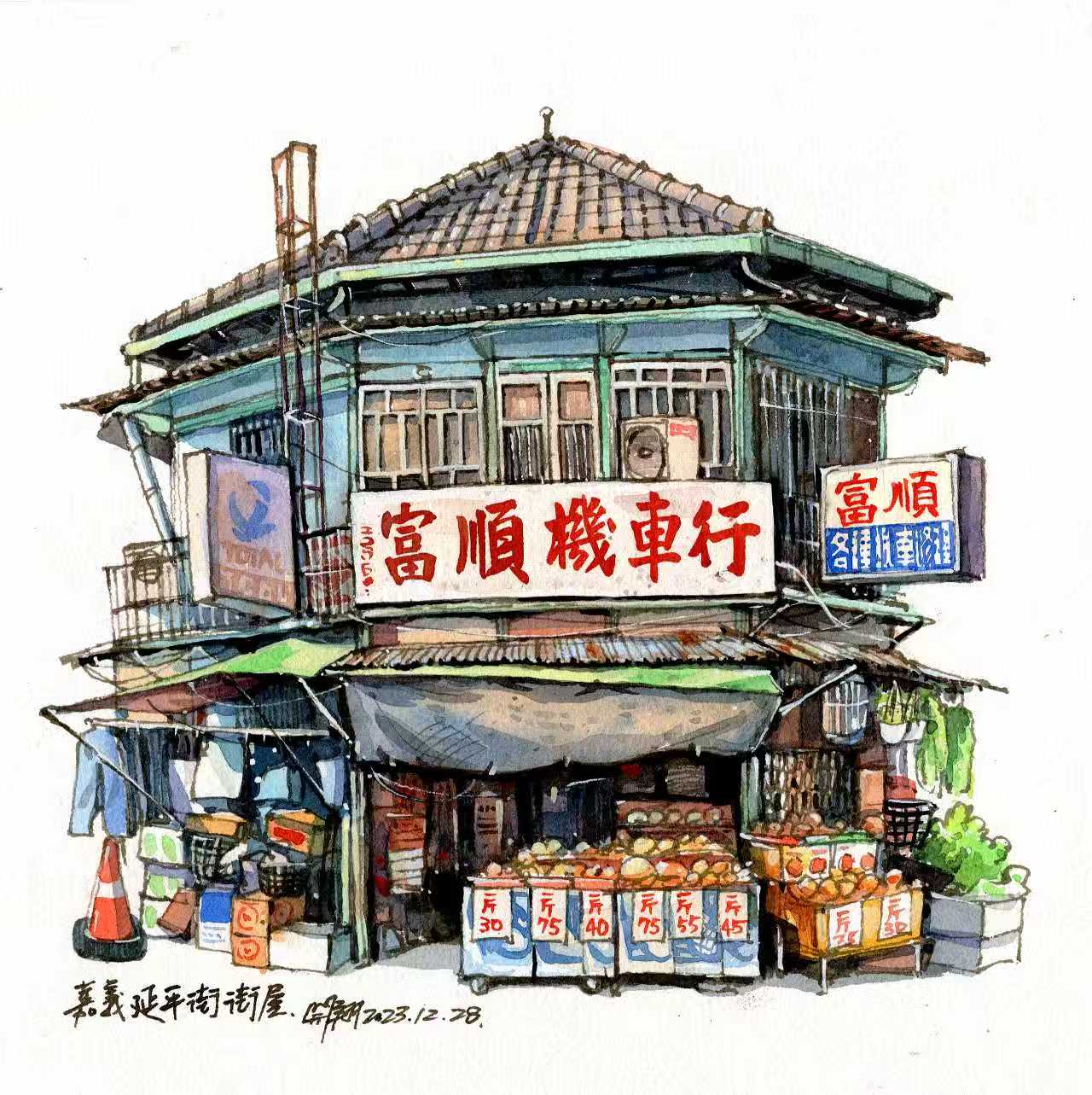
I’ve published six books so far. The better-known one is probably *Street House Taiwan*. This book not only earned me the Eslite Best Newcomer of the Year award in 2019, but was also translated into Japanese, French, and Spanish. It records interesting houses I discovered while wandering around Taiwan. These houses aren’t necessarily “typically beautiful,” but they have a rich sense of life that gives them a unique character.
Later, I published *Hundred Stalls Taiwan*, which categorizes and introduces various kinds of street vendors in Taiwan based on their display and mobility. Both books focus on Taiwan, documenting and introducing local culture. There’s also a technique book, *Sketch Taiwan*, which introduces my tools and painting steps—good for readers who want to learn the craft.
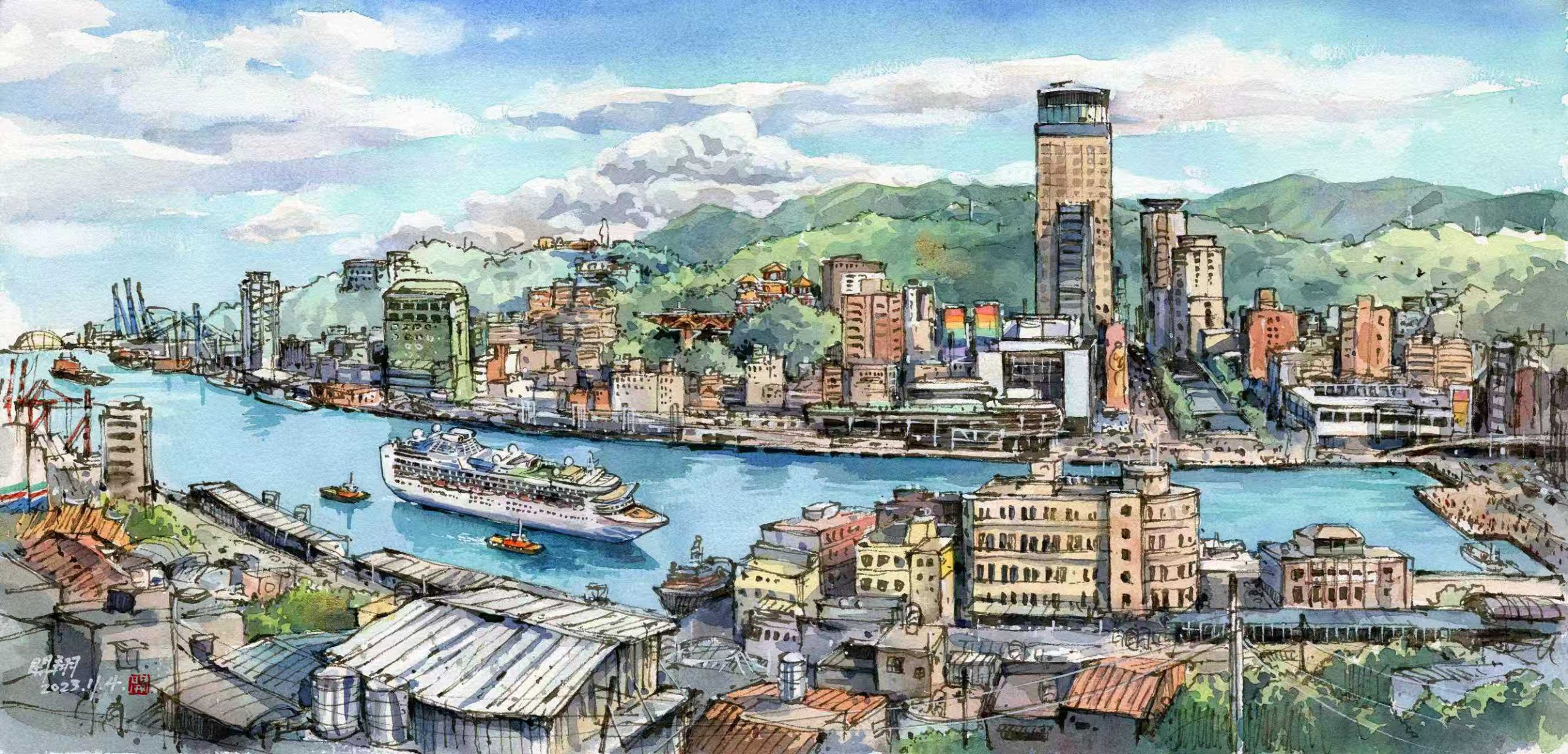
After that, I published *Rain Port Colors*, *Sunshine Pingtung*, and *Chronicles of Pingtung City*. Unlike my earlier books on Taiwan as a whole, these focus on single cities. For example, *Rain Port Colors* is based on my nearly two years of living and observing in Keelung. *Sunshine Pingtung* and *Chronicles of Pingtung City* are the result of five years of documenting Pingtung. Each city’s record has its own unique flavor, and all are worth exploring.

You’re known for painting cityscapes. Which cities have left a deep impression on you, and which would you recommend for sketchers to visit?
I’ve lived in Keelung and Kinmen for nearly two years each, and both have incredibly rich local characteristics.
Keelung, known for its port, has a unique harbor landscape. As you walk through the city, you can see huge cruise ships docked at the port and black kites soaring in the sky. The bustling markets are filled with countless local snacks. Even in the early morning, there’s a “night-only” fish market. To me, it’s a city full of life, quite raw and vibrant. Surrounded by hills, visitors can quickly change their perspective of the city—great for those who want to paint mountains, sea, and cityscapes.
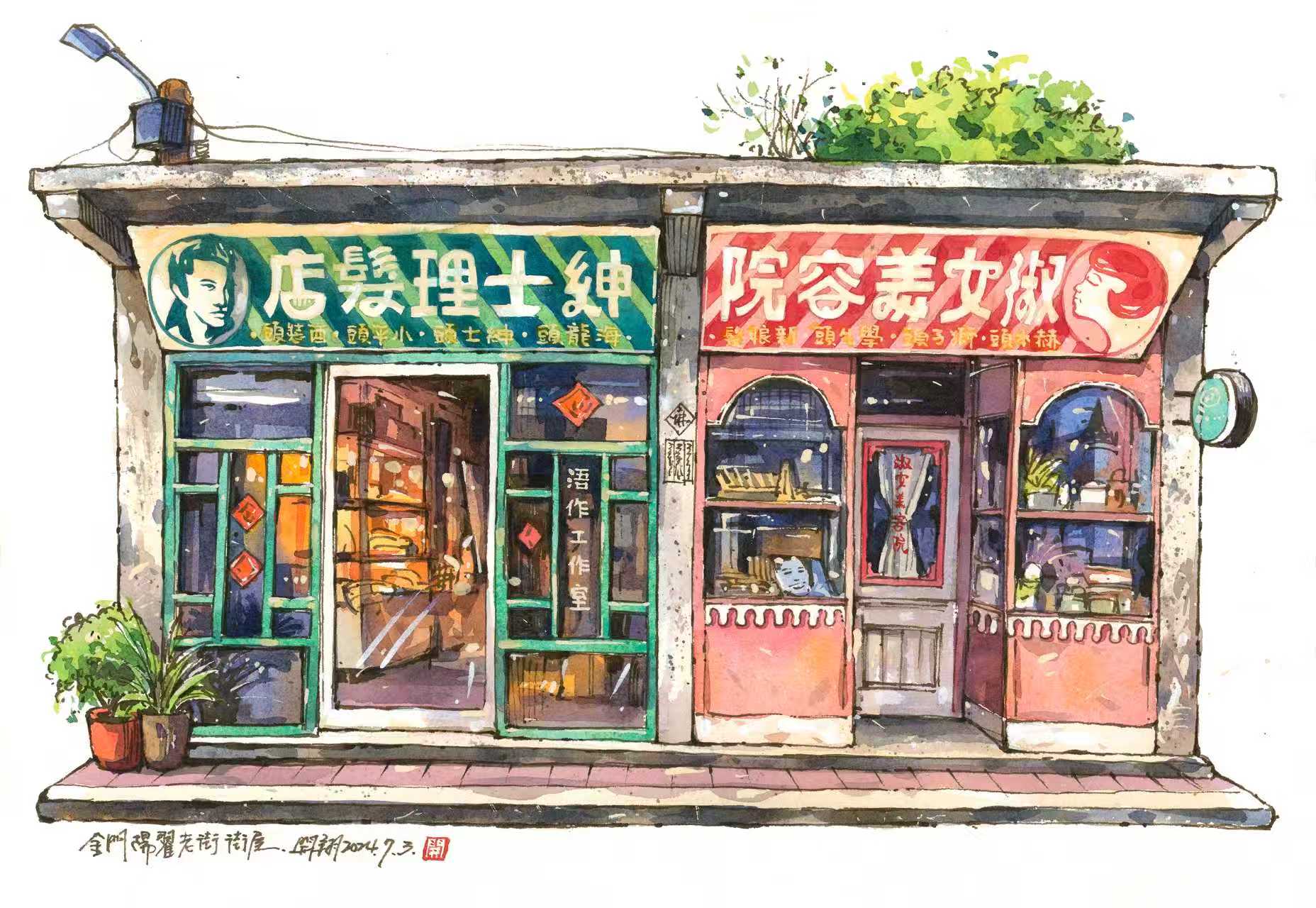
Kinmen is known for its Hokkien culture, overseas Chinese heritage, and wartime relics. The landscape isn’t as bustling as a big city, but it retains a lot of pristine, rustic atmosphere. Though Kinmen is small, its cultural richness is immense. You can see understated yet elegant red-brick buildings, as well as grand, ornate western-style houses left behind by early emigrants who made good and returned home. For those interested in military history, Kinmen also has many early military relics. Senior local artists who have worked there for decades often say, “Kinmen is endless for sketching.” I highly recommend it.
Is there a particular theme or project that you are especially proud of? If so, what makes it special to you?
The most memorable documentation for me is the “Pingtung West Market.” Although it’s not a well-known market, during the process I went from being questioned about my motives by the vendors to gradually being accepted and even liked. Eventually, after relocating, some shop owners used my paintings as their new store signs. There were many complicated emotions along the way. In the past, when documenting a place, I inevitably felt a little “pride,” as if what I was doing was something great. But during this process, I realized that not every vendor was unwilling to see the market demolished—some actually wanted it gone. So a few vendors didn’t approve of my documentation. This was an important lesson for me, teaching me to empathize with the subjects I document from different angles.
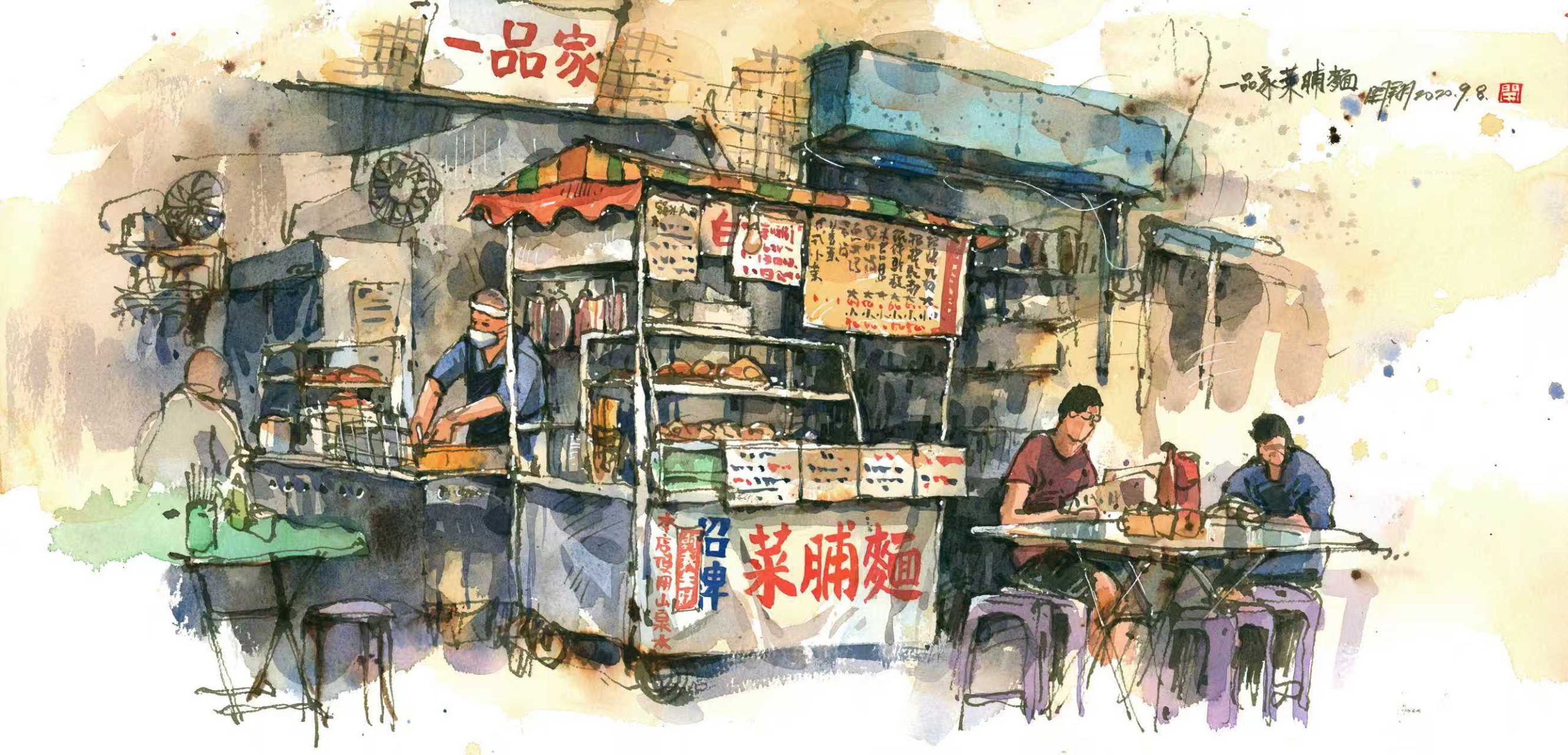
Moreover, documenting a shop in a way is also a form of “consumption” of that shop. What we paint is not just a storefront; it carries the shop owners’ emotions, frustrations, and hopes. We should face this with humility and seriousness. I experienced the splendor of the West Market just before it disappeared, witnessed its demolition, and saw the new market built. It was a very complete and deeply felt documentation experience.
How has your military service helped your artistic creation?
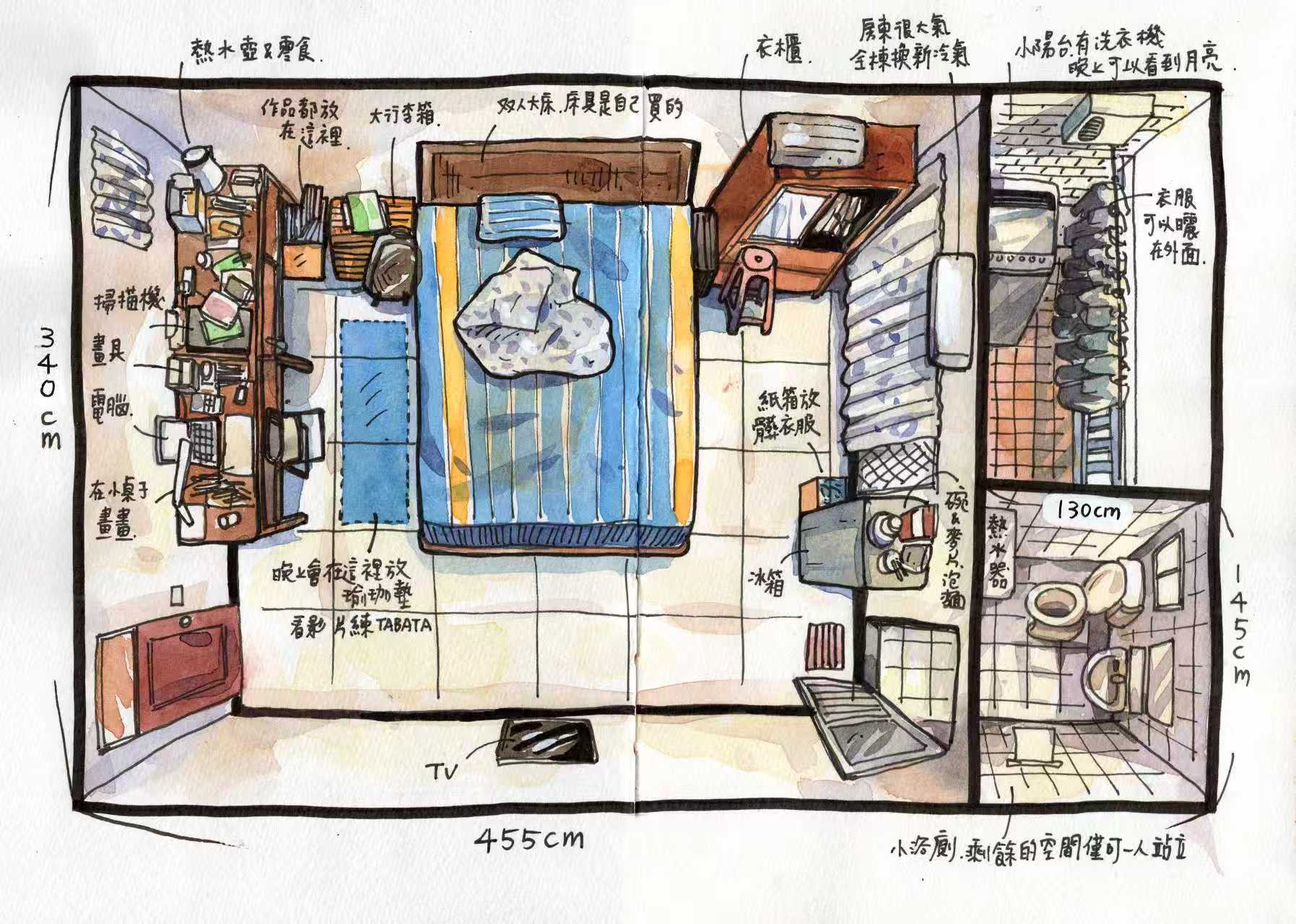
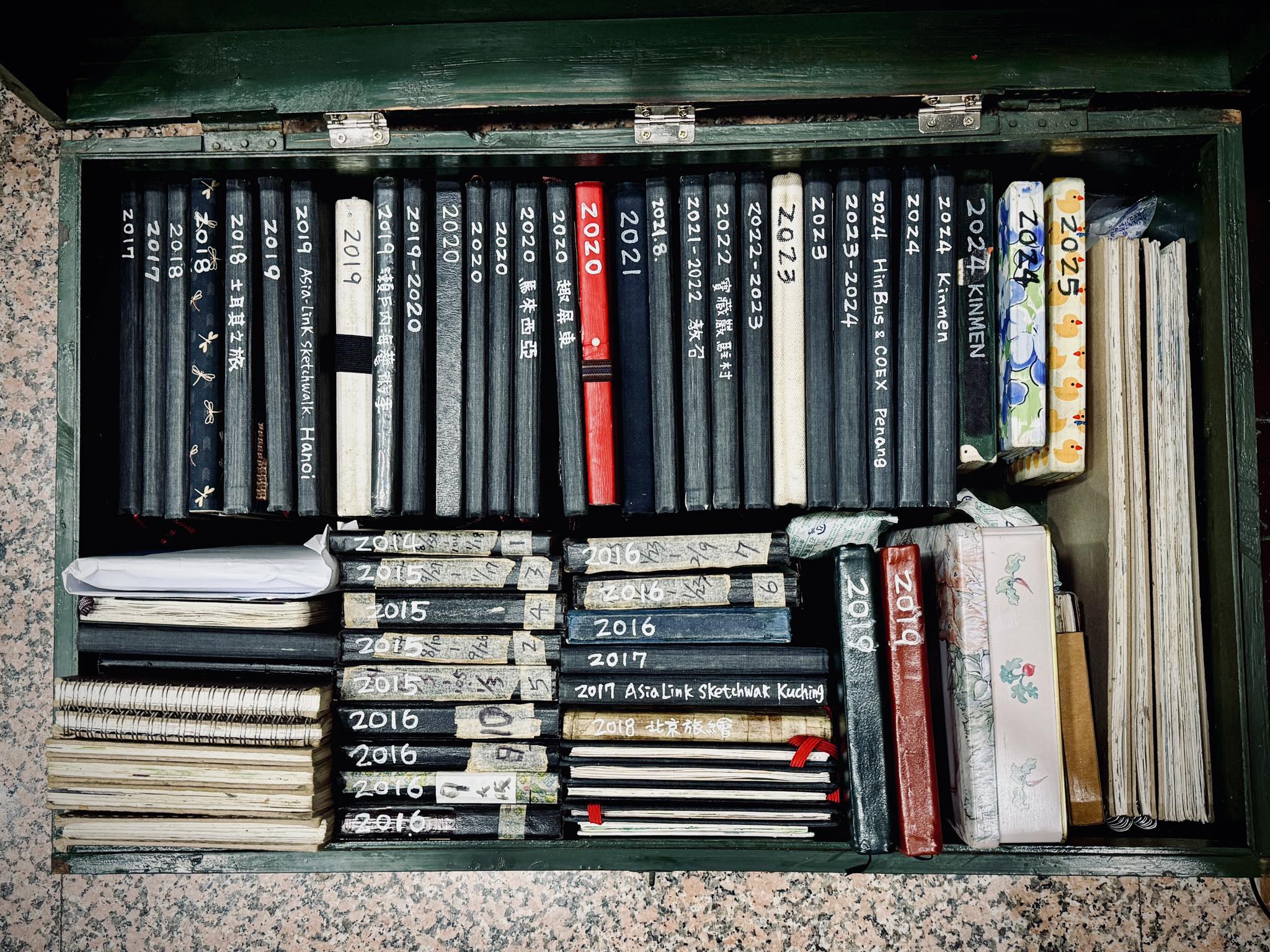
I served in the military for ten years. During that time, I was busy with work and didn’t have many opportunities to use my painting skills. But looking back, perhaps that’s why I got used to documenting things in relatively basic conditions, using small pockets of time.
I always carried a notebook with me, where I recorded meeting notes, daily thoughts, and casual sketches. These weren’t masterpieces, but they were very “pure” and important records of daily life—a habit that continues to influence me today.

What are your favorite art materials, especially paper? Why do you choose these materials, and what do you appreciate most about them?
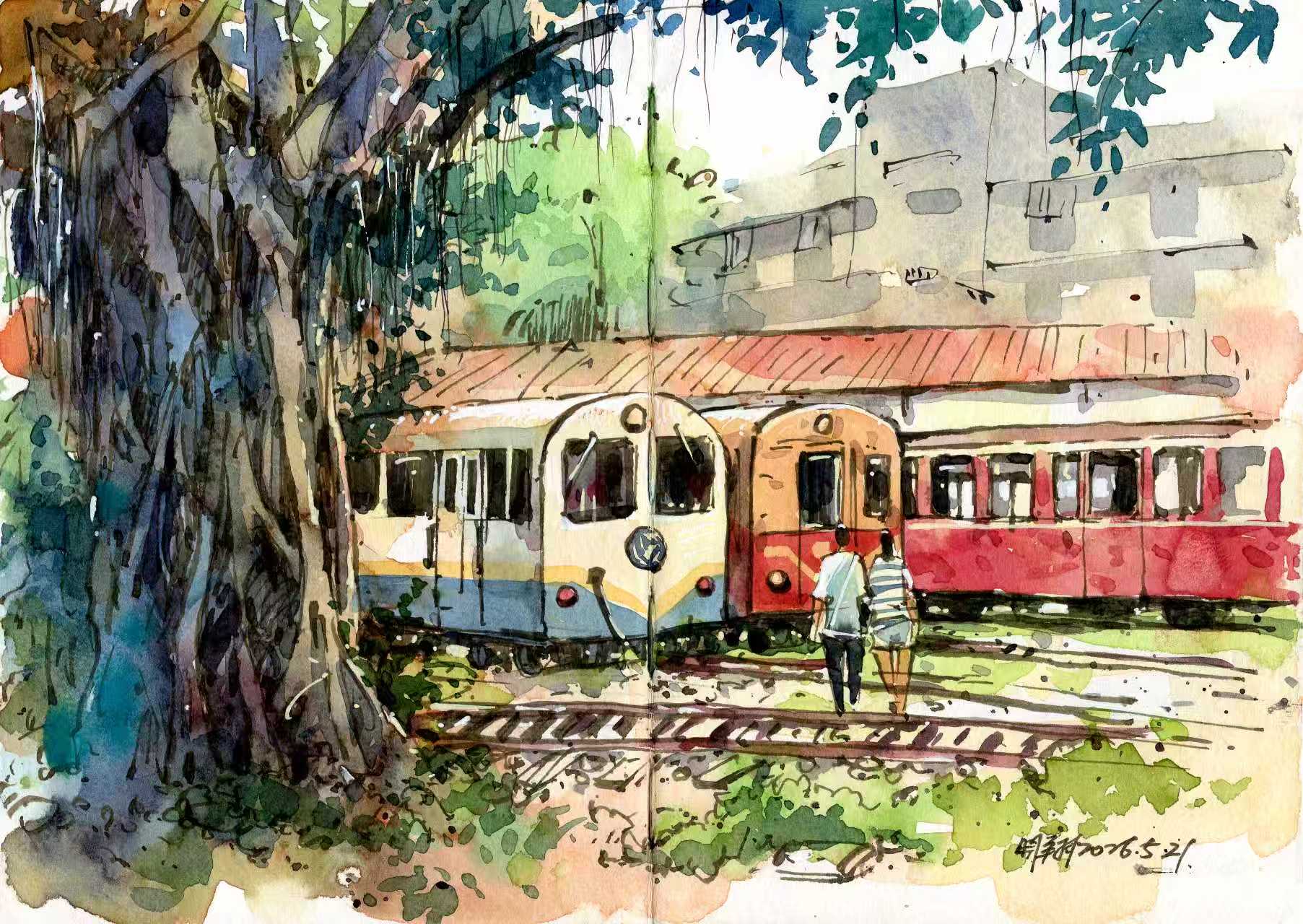
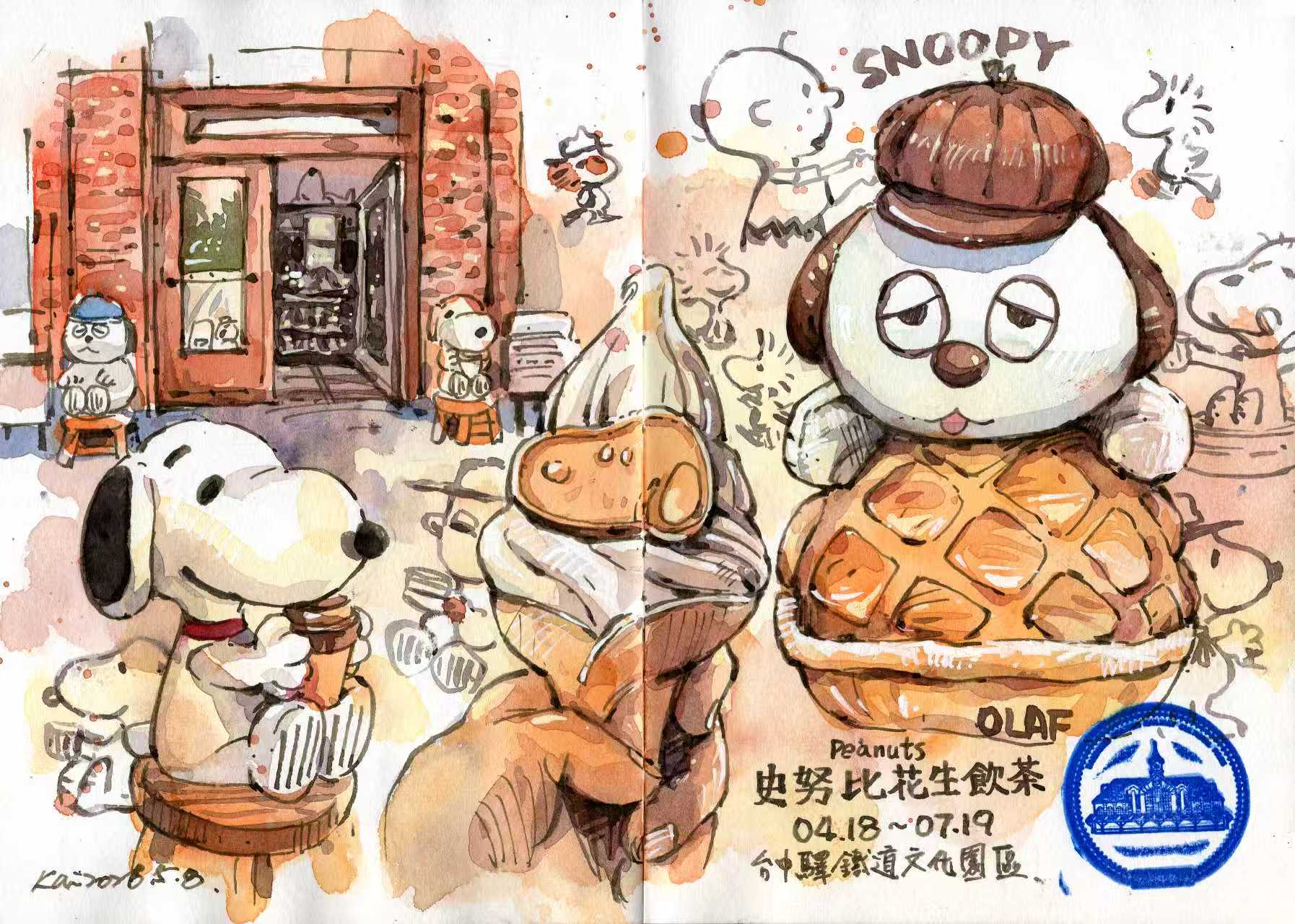
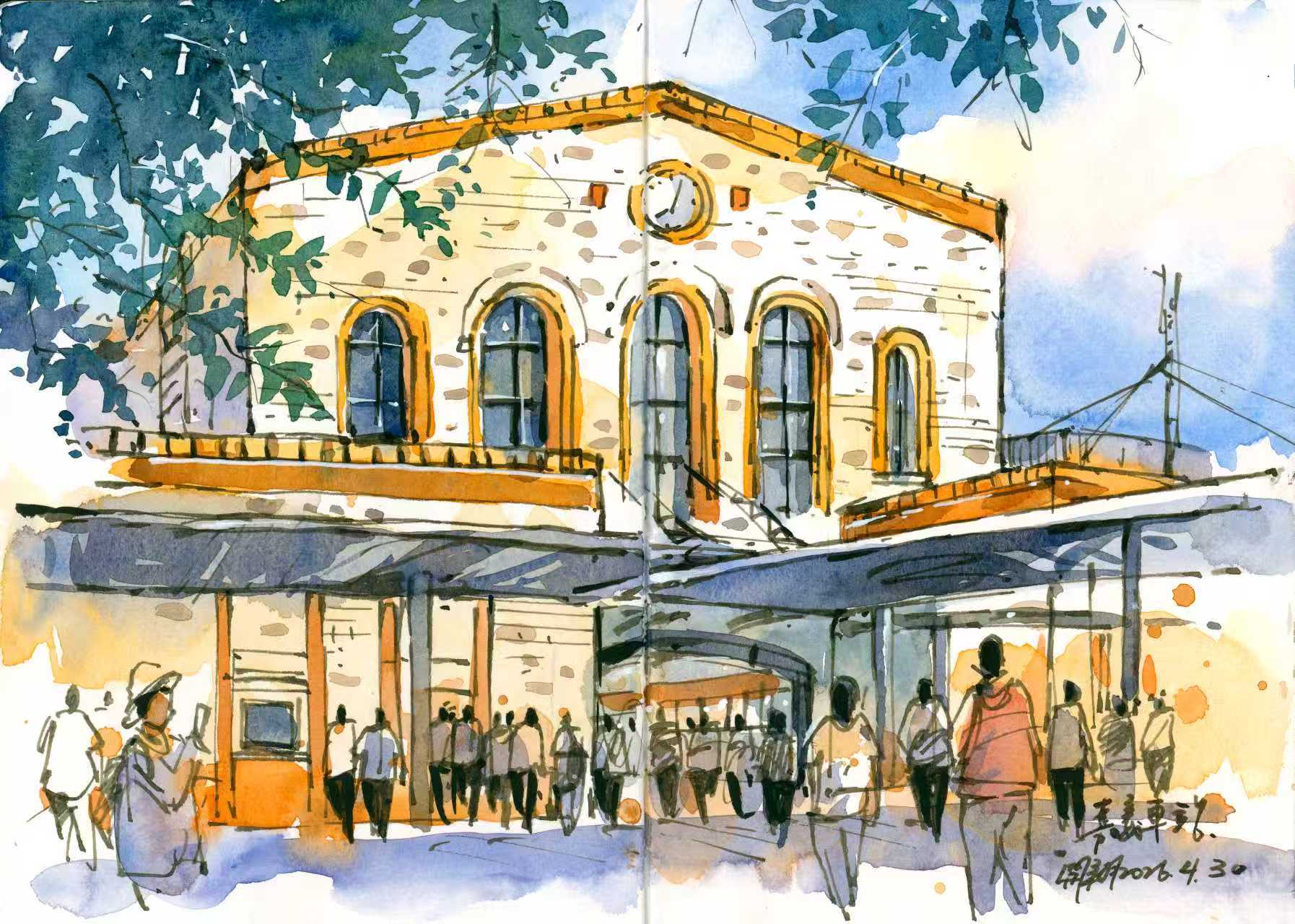
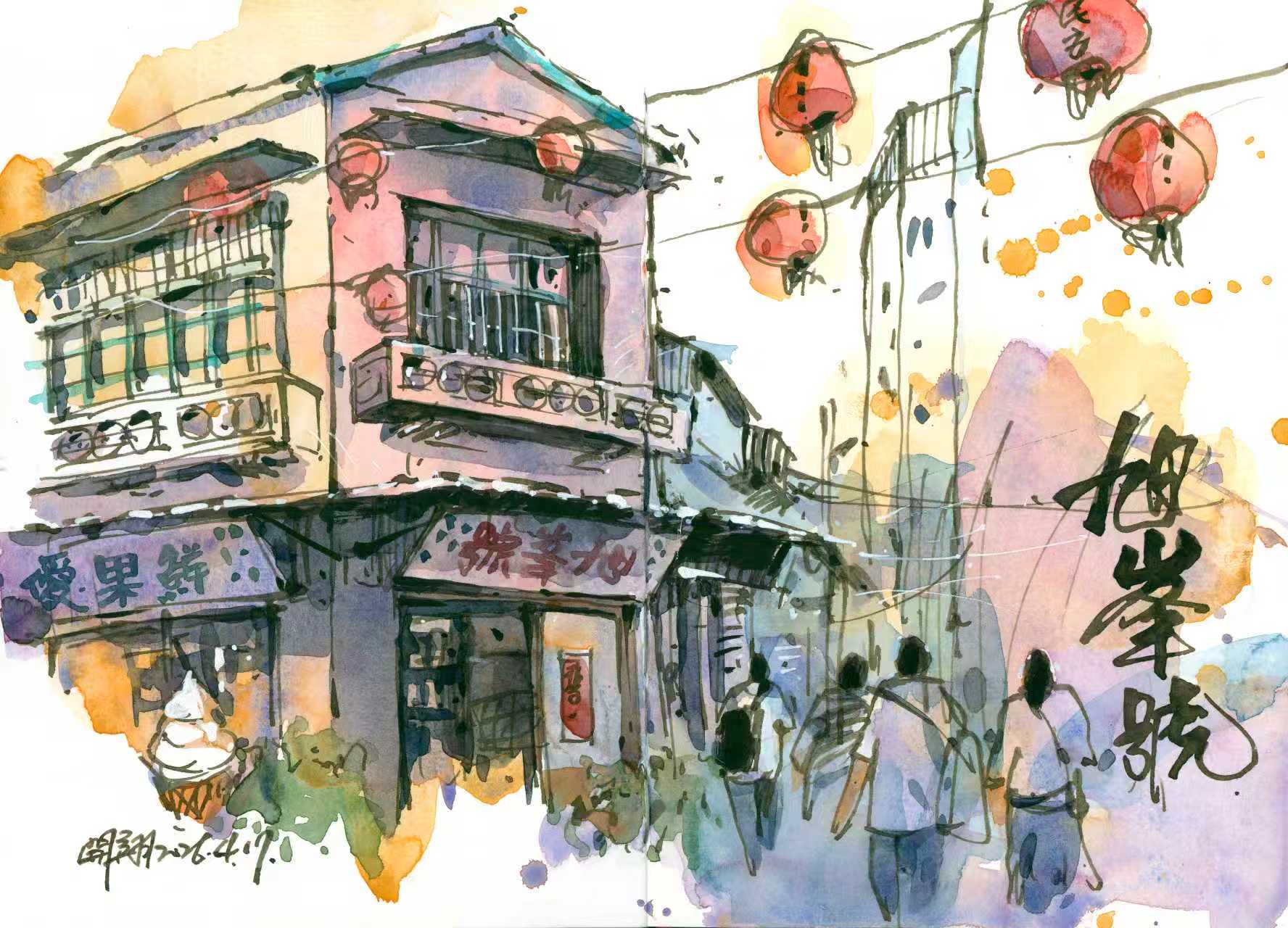
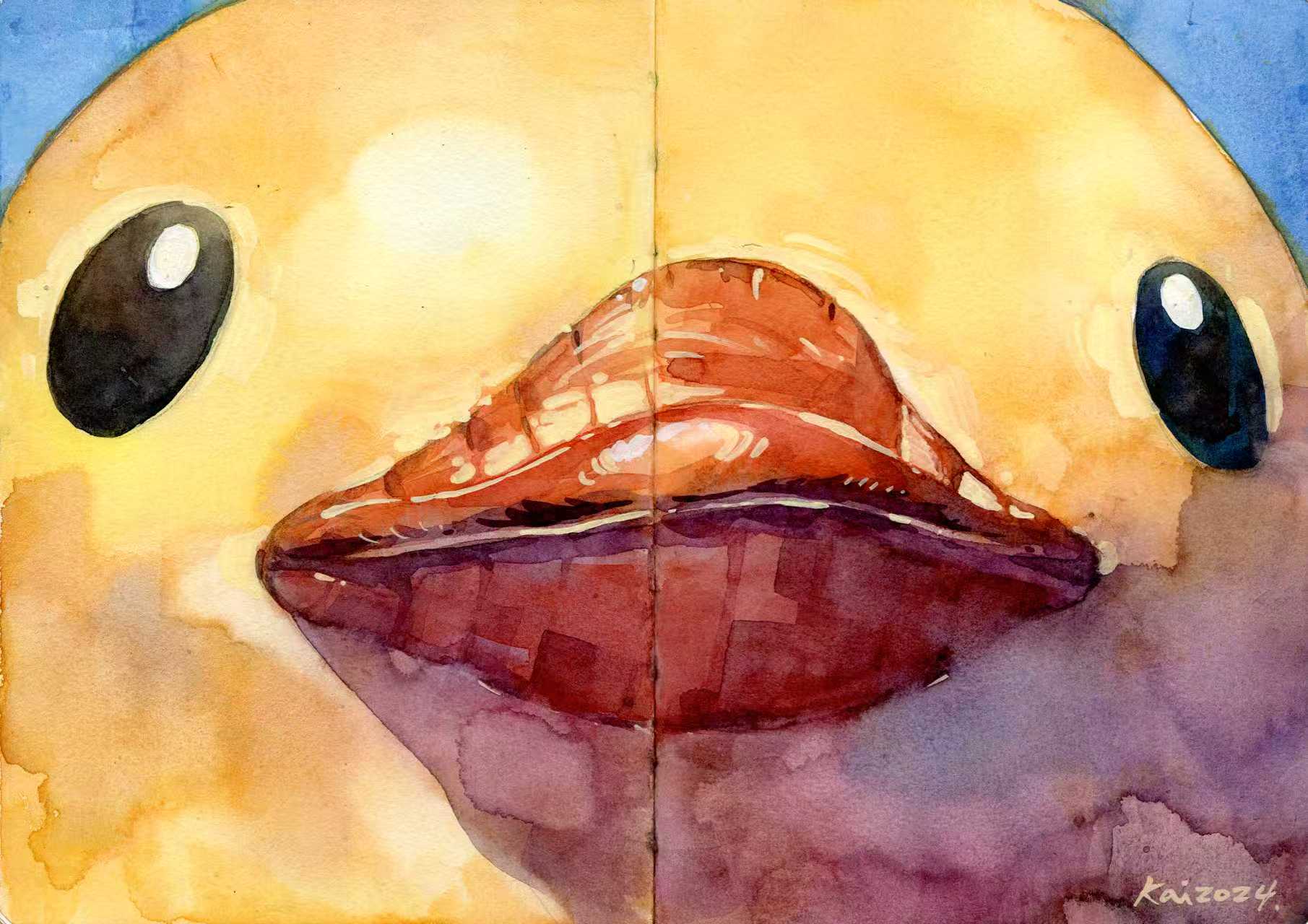
My most used materials are watercolor and a fountain pen with a calligraphy nib. I choose this combination because I love the convenience of watercolor, its vibrant colors, and the effects of water blending. The calligraphy nib’s varied lines are also a reason I prefer it.
My most used sketchbook is the *Hahnemühle Watercolor Book 200gsm A5*. Over the years, whenever I visit an art supply store, I often try out interesting notebooks. But after trying so many, I always come back to Hahnemühle. First, I love the lay-flat binding and solid construction. The hardcover gives the notebook both a nice feel and good protection. The paper thickness is 200g—just right. Any thinner, and it might not handle multiple layers of washes; any thicker, and it feels a bit heavy, lacking a sense of lightness. 200g is perfect for me. The paper has a slight texture, which works well for pen or fineliner line work—the lines flow smoothly. I especially love the water stain effects from color interacting with water. Hahnemühle paper excels at capturing these subtle color variations. That’s why it remains my top choice.
What advice would you give to someone just starting with watercolor? Any techniques or methods that helped you when you were beginning?
Many beginners ask, “Do I need to go to an art studio and learn drawing first?” I think this isn’t wrong, but it’s worth considering. Of course, practicing the fundamentals in a studio is important. But from the perspective of urban sketching—which emphasizes “process over result”—whether the final piece is “good or not” may not be the most important thing. In fact, many people give up on drawing when faced with boring basic exercises.
So I usually suggest that in this internet age, go online and look at other people’s work. There are so many talented people online, and you’ll surely find styles you like. You’ll go through an imitation phase at first. I recommend starting with simple subjects and, most importantly, finding like-minded friends to draw with, supporting each other. Don’t put too much pressure on yourself. Keeping the interest alive is most important. Later, if you become more ambitious, you can go to an art studio to work on the fundamentals—after all, good basic skills help you go further.
Do you have any new ideas or projects in the works that you’d like to share? What can we look forward to in the future?
After living in Keelung and Kinmen, I moved to “Chiayi City” this May. Chiayi is known as the “City of Wood.” In the early days, it exported a lot of cypress timber, and to this day it’s known for Alishan and turkey rice, among other things.
I plan to live in Chiayi for two years, and eventually publish books on Kinmen and Chiayi. I hope for your continued support.
Over the past two years, I’ve had a lot of contact with sketching friends from Hong Kong, Guangzhou, and Xiamen. I’ve found that the urban sketching community in mainland China is very vibrant, with diverse styles and many skilled artists. There’s a lot we can learn from them. I look forward to more opportunities to interact and exchange ideas with sketchers there.
This is truly a wonderful message, and I believe it will inspire many people! Thank you very much for taking the time to talk with us and share your creative journey. We wish you continued success, and hope you will continue to inspire more people!
Make sure to follow Cheng Kai-Hsiang on Instagram to discover more of his inspiring urban sketches: