Some artists create entirely new worlds, while others make us look at our own a little differently. In her delicate, dreamlike illustrations, Ilaria D’Angelo reveals the magic hidden in everyday moments, in nature, small details and stories that might otherwise go unnoticed.
In our interview, she takes us into her artistic world and talks about inspiration, imagination and the ideas behind her illustrations.
To start, could you tell us a little about yourself? How did illustration become such an important part of your life?
It’s hard to know where to begin because drawing and painting have always been a part of me. I think this grew naturally from my childhood interests. I grew up surrounded by illustrated fairy tales and, later, fantasy books. Like we all do when we’re little, I was inclined to daydream about magical worlds and adventures. But I never stopped!
Being an avid reader wasn’t enough for me. So, as soon as I could, I started writing and illustrating my own stories, filling notebook after notebook. Looking back, I really envy that ability unique to children: letting ideas flow without filters or anxiety. Even though the result was often volumes of crooked „comics“ that only I could understand, that didn’t matter. All that mattered was making the imaginary stories in my head feel more real.
I believe painting is still largely responsible for keeping that childlike side of me alive. It is the part capable of dreaming and finding beauty in the world around us. That’s why I couldn’t live without it.
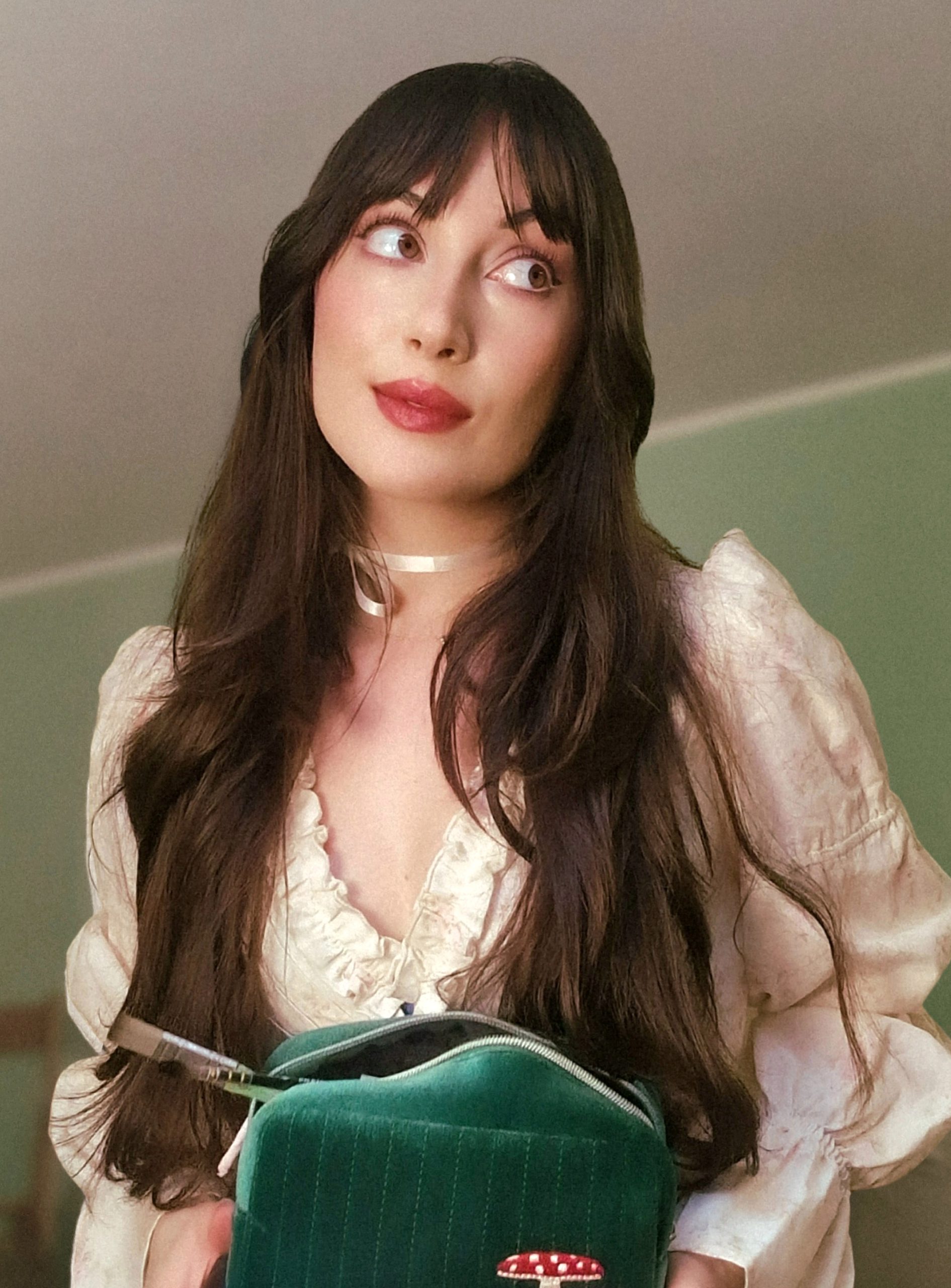
Looking at your work, one quickly gets the feeling of entering something magical, dreamy and full of stories. How would you describe your artistic fantasy world in your own words?
Though the world I paint is a fantasy world, I prefer to think of it as a hidden world. To me, it is a forgotten realm that we have unlearned how to see. We all know that life grows increasingly complicated as we become adults. In this particular historical moment, I feel that simply „existing“ is an incredibly complex affair.
We face not only so many worries but also such a barrage of input. As a result, noticing the little things in everyday life no longer comes naturally. Yes, at the risk of sounding terribly clichéd, I am talking about those famous, simple little things. Often, we actually have to make a conscious effort to stay present and grounded in reality. I know this too well, with all the desperate relaxation techniques I’ve picked up on YouTube.
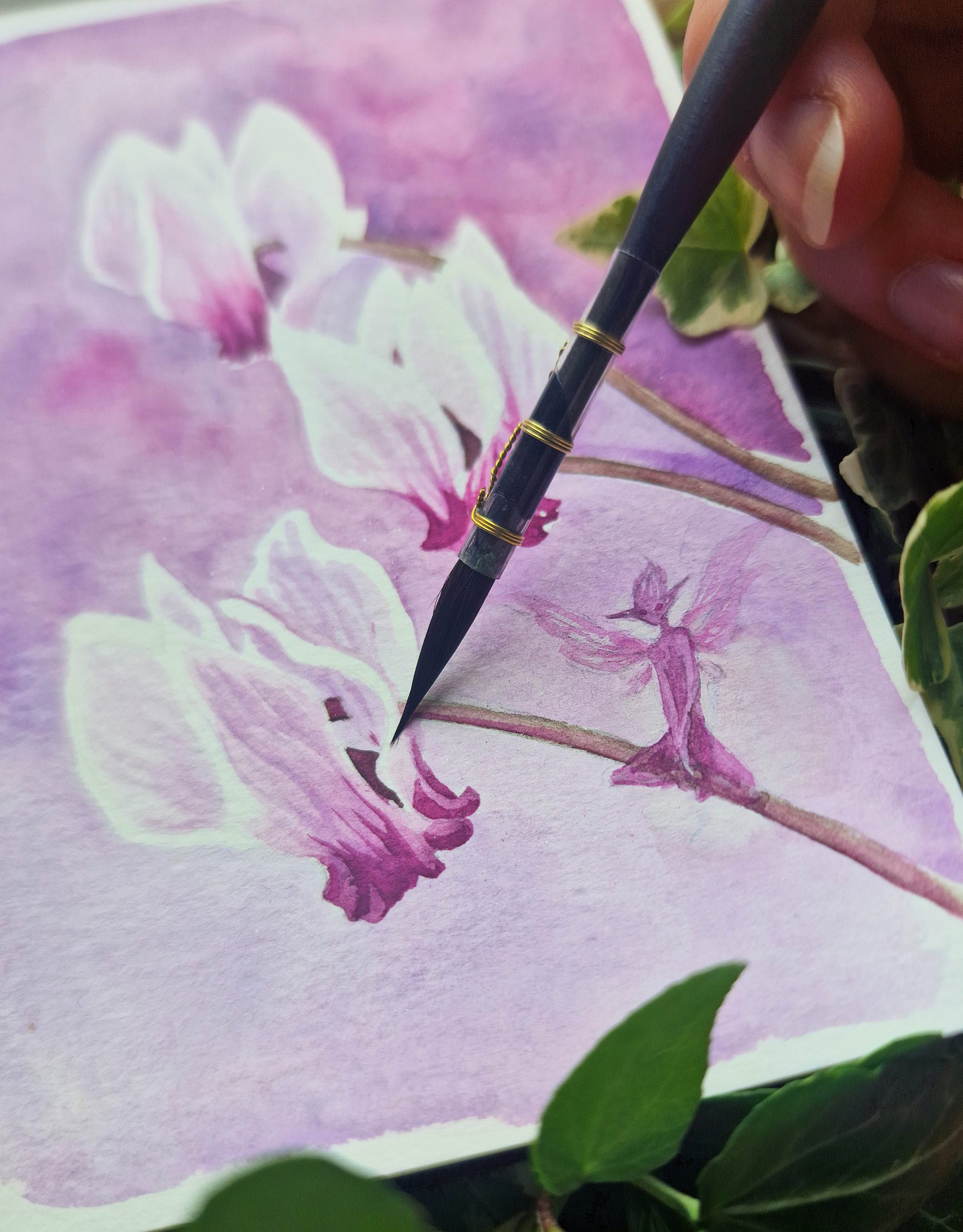
It can be very hard to spot a flower that looks like a ballerina. It can also be hard to spot a dragon-shaped cloud hiding behind the silhouette of a building. Yet they are there. They exist, and I can’t even claim credit for inventing them.
Or at least, my therapist says I’m not that far gone. So, I would say that the „fantasy“ world in my illustrations isn’t separate from our own. Quite the opposite: it is simply a part of our world that demands a little more attention.
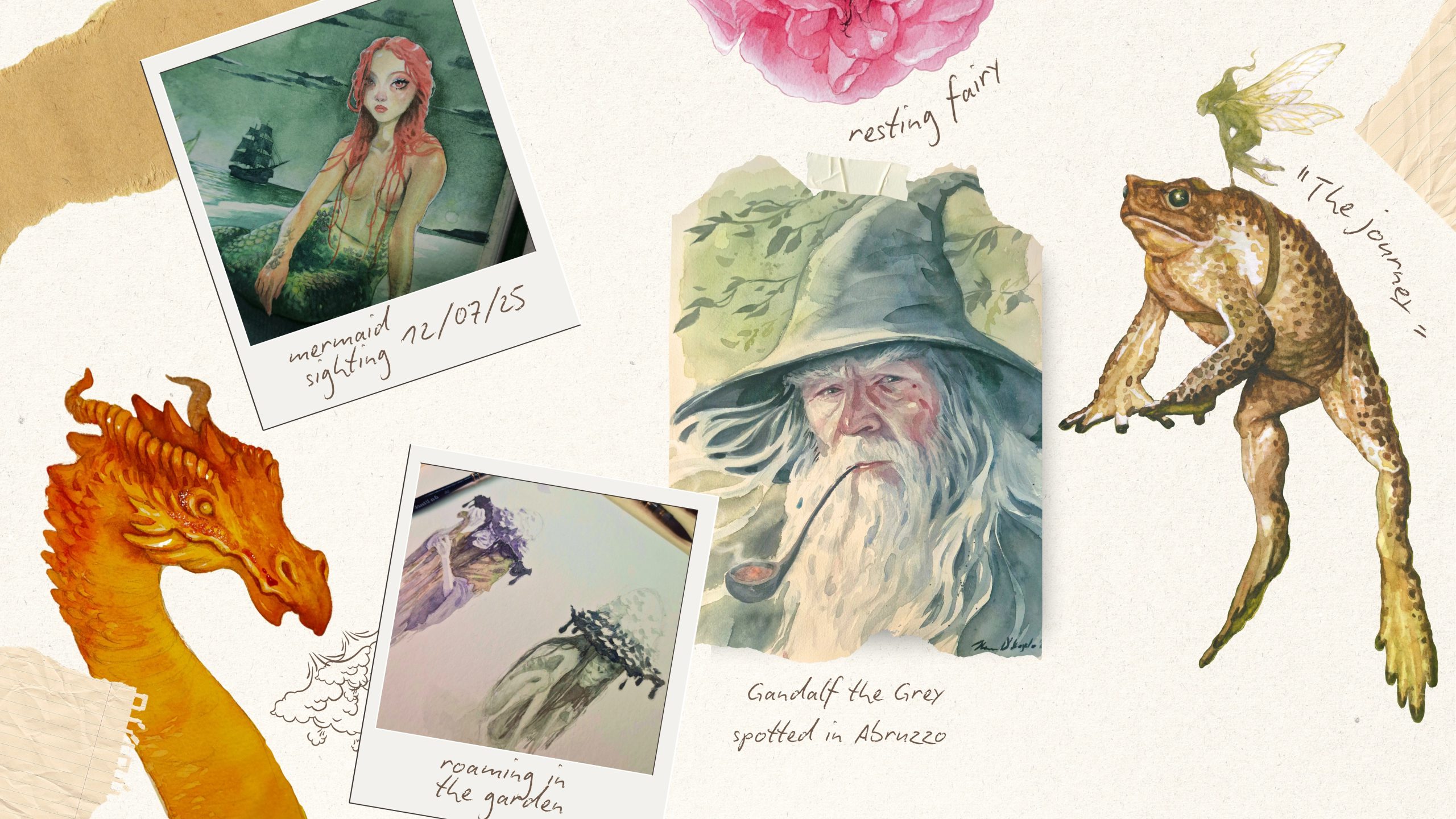
What usually inspires your illustrations and the stories behind them? Are there certain moments, feelings or ideas that often stay with you?
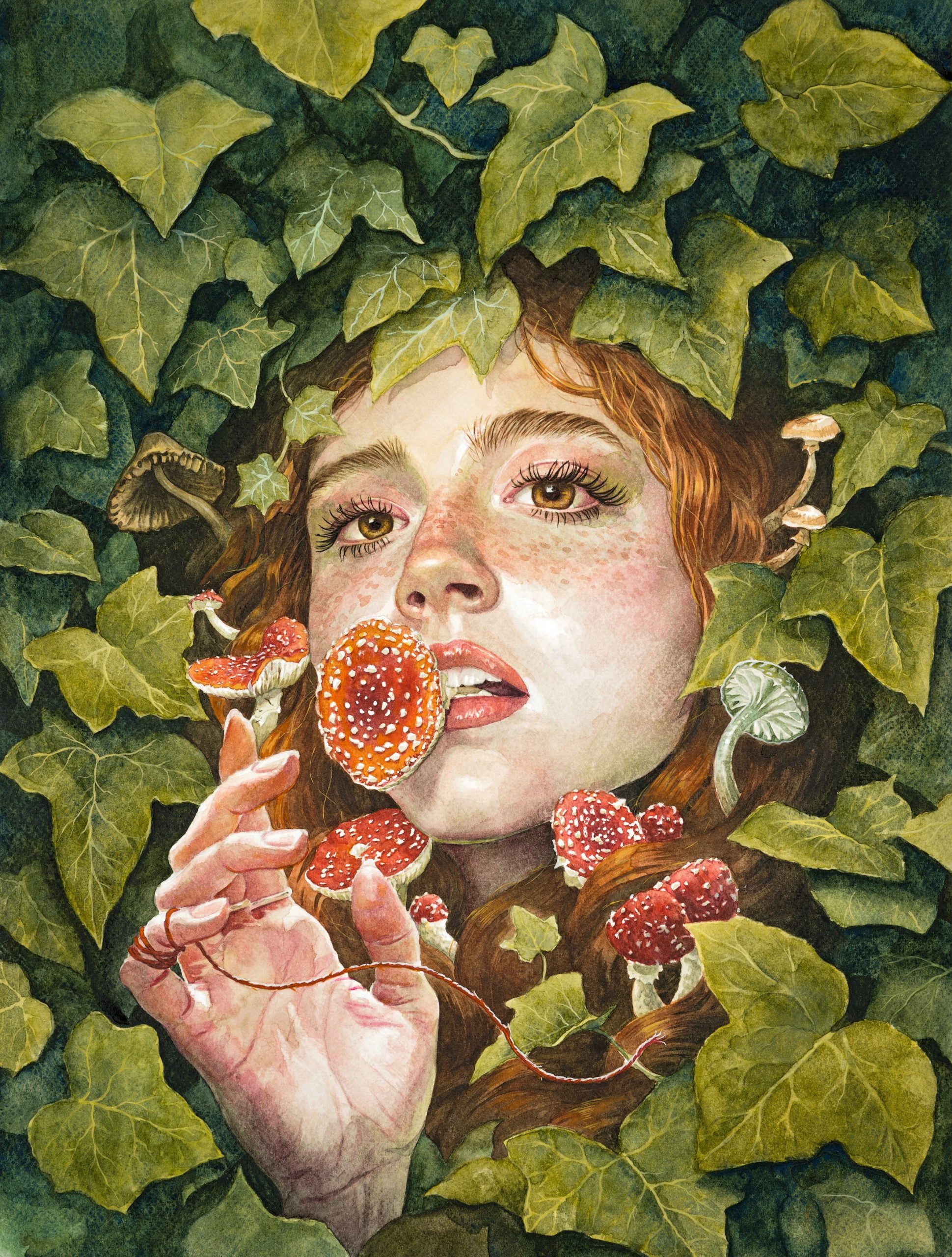
I touched upon this question a little in my previous answer. My greatest inspiration is nature, and I seek to connect with it as deeply as possible. To me, that is where the sense of mystery that seems lost in the modern world still hides. Many untold stories lie hidden there. For example, they might appear in the shape of a unique tree trunk or the funny expression of an animal.
I also draw a great deal of inspiration from the atmosphere of paintings and stories that have always captivated me. These include the books about fairies and magical creatures from my childhood. I must mention artists like Alan Lee, Brian Froud and Beatrix Potter. I am also drawn to „Fairy Art“ inspired by British folklore and to Pre-Raphaelite paintings.
Even if the connection is not immediately obvious, these influences help me evoke specific feelings. I think of the slightly melancholic romanticism of an ancient, lost world. I also think of an aesthetic rooted in realism and nature. Ultimately, what makes me dream is what stays with me. My small hope is that my drawings inspire others to dream too.
Your illustrations have a very special atmosphere. How do you bring this unique mood to life in your work?
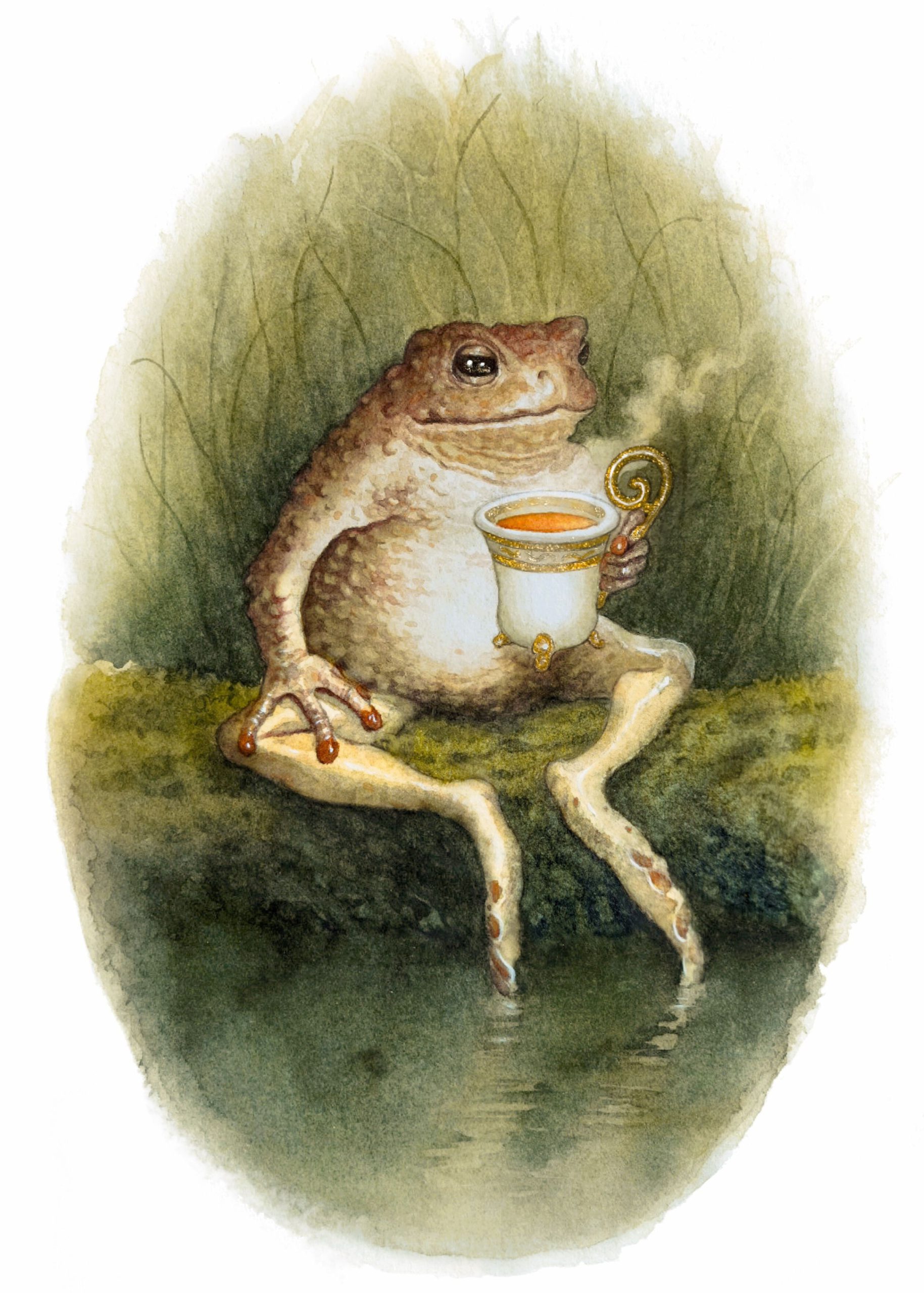
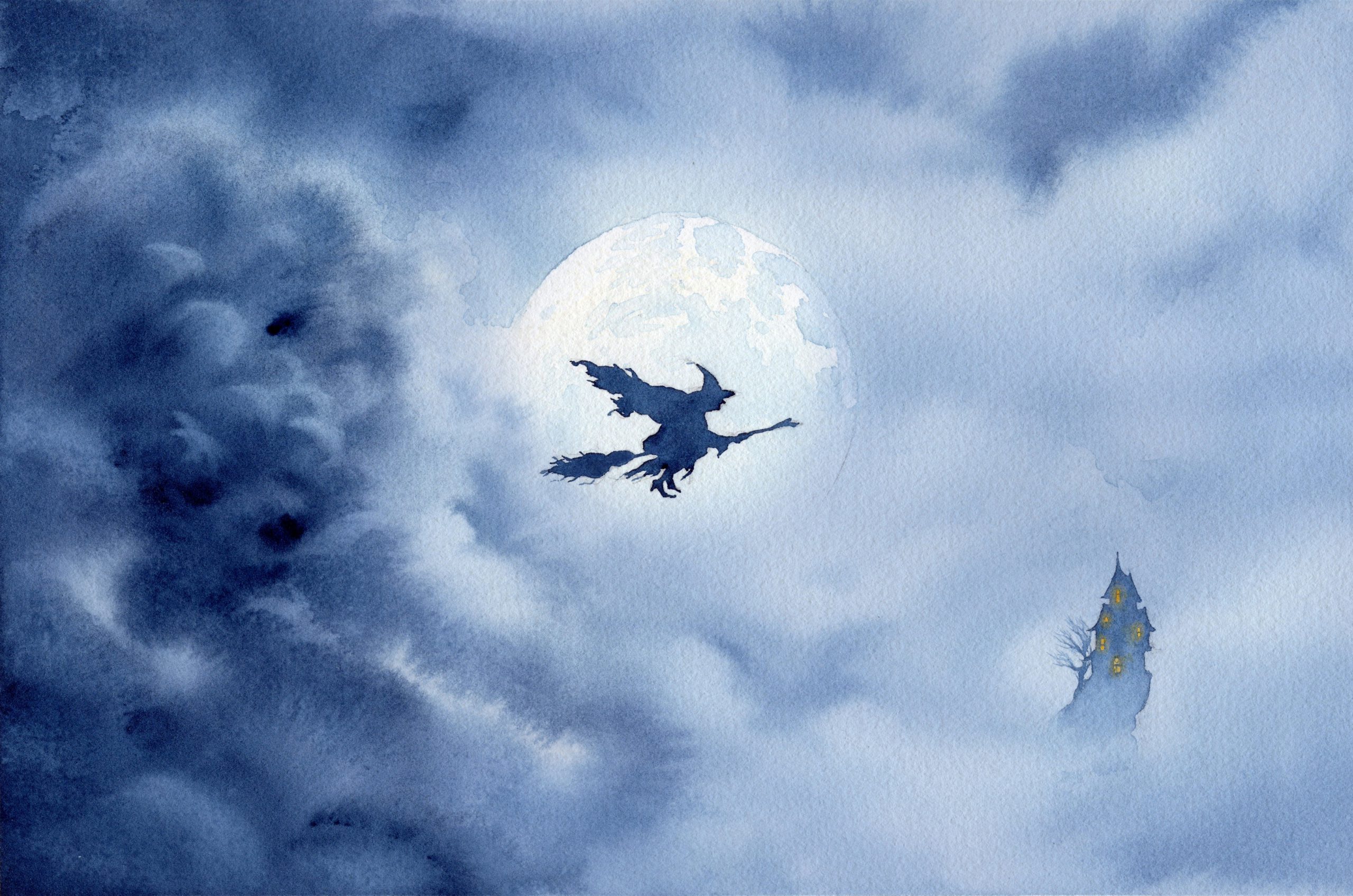
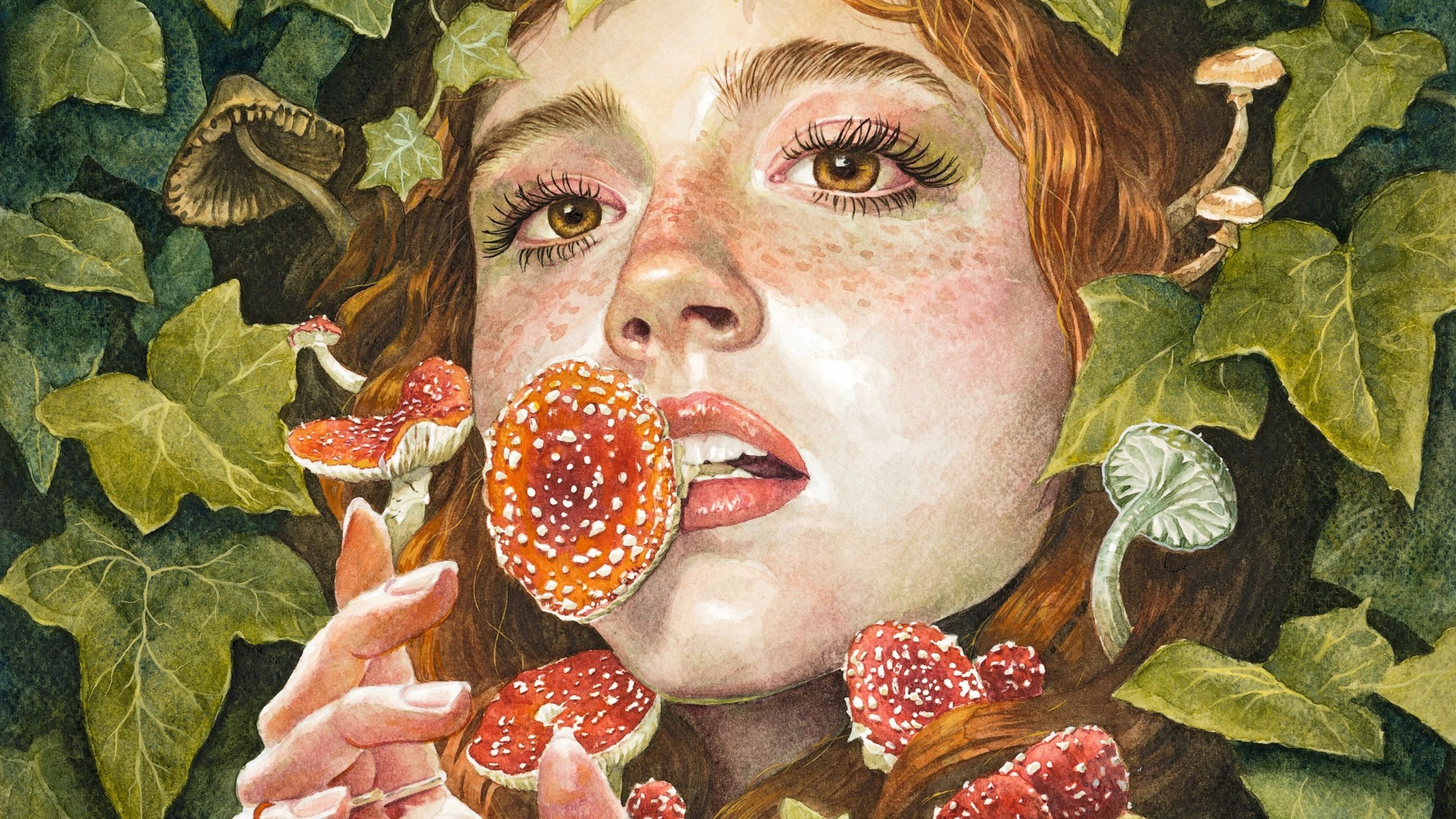
I am very happy to hear that! I would attribute much of the credit to watercolour. It is the medium that has always felt most natural to me, even after years of experimentation. It aligns perfectly with that sense of dreams and magic.
I enjoy combining the more ethereal, unpredictable qualities of watercolour with its more descriptive side. As a result, the subjects I paint are realistic enough to feel close, yet they remain elusive. Perhaps that is because I like the idea that they do not come to us. Rather, we are drawn into their world.
Could you walk us through your creative process a little – from the first idea or sketch to the finished artwork?
Usually, an idea stays in my head for a long time before coming to life. This is mainly because I tend to overthink things. Also, I’m a procrastinator. When planning a major, complex, or commissioned illustration – essentially, work – I sketch it digitally first. This allows me to quickly experiment with composition and colour palettes. I often take photos of myself, friends, and family to find the perfect reference for a pose. That is a really fun part of the process. Seeing my boyfriend dressed as a hunched-over old lady is a privilege I otherwise never would have had. Next, I run various colour tests using watercolours to find the right shades and combinations. By the time I’m ready to start the actual painting, a lot has already changed from my initial idea!
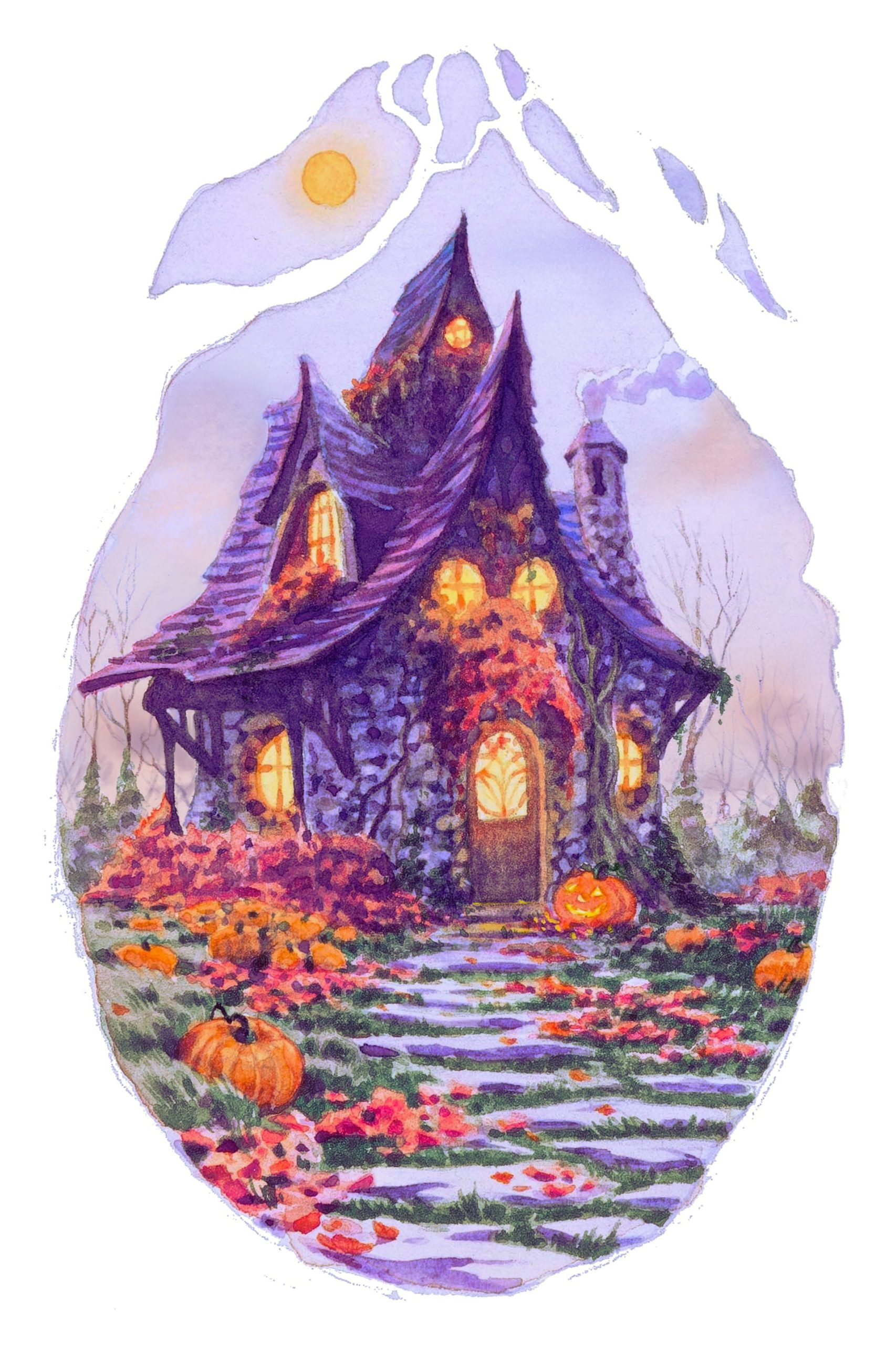
The feeling I want to convey through the illustration is always very clear. However, finding the right visual way to express it requires several attempts. On a few other, miraculous occasions, I feel the urge to jot down an idea immediately. I simply draw it as it comes to me.
Sometimes, I end up cutting pages out of my sketchbook to frame them. That happens even when I hadn’t planned on loving the drawing at all.
Are there any themes, emotions or visual details that naturally find their way into your work again and again?
I’ve already touched upon themes and emotions. Still, I fear I might be repeating myself when it comes to visual elements too! Certain plants recur in my paintings because they evoke specific feelings in me. I also love their symbolism.
Ivy and moss, for instance, instantly convey a sense of intimacy and safety to me. They often become a sort of nest in which to cradle my characters. Woodland colours, especially autumnal ones, also predominate in my work. Perhaps they do so for those very same reasons.
The theme of home also appears frequently, and quite consistently, I might add. I like to imagine the cozy dwellings of fairies and woodland creatures as blueprints for my own home. After these questions, I certainly have some interesting material to bring to therapy!
What do you enjoy most about the techniques and mediums you work with?
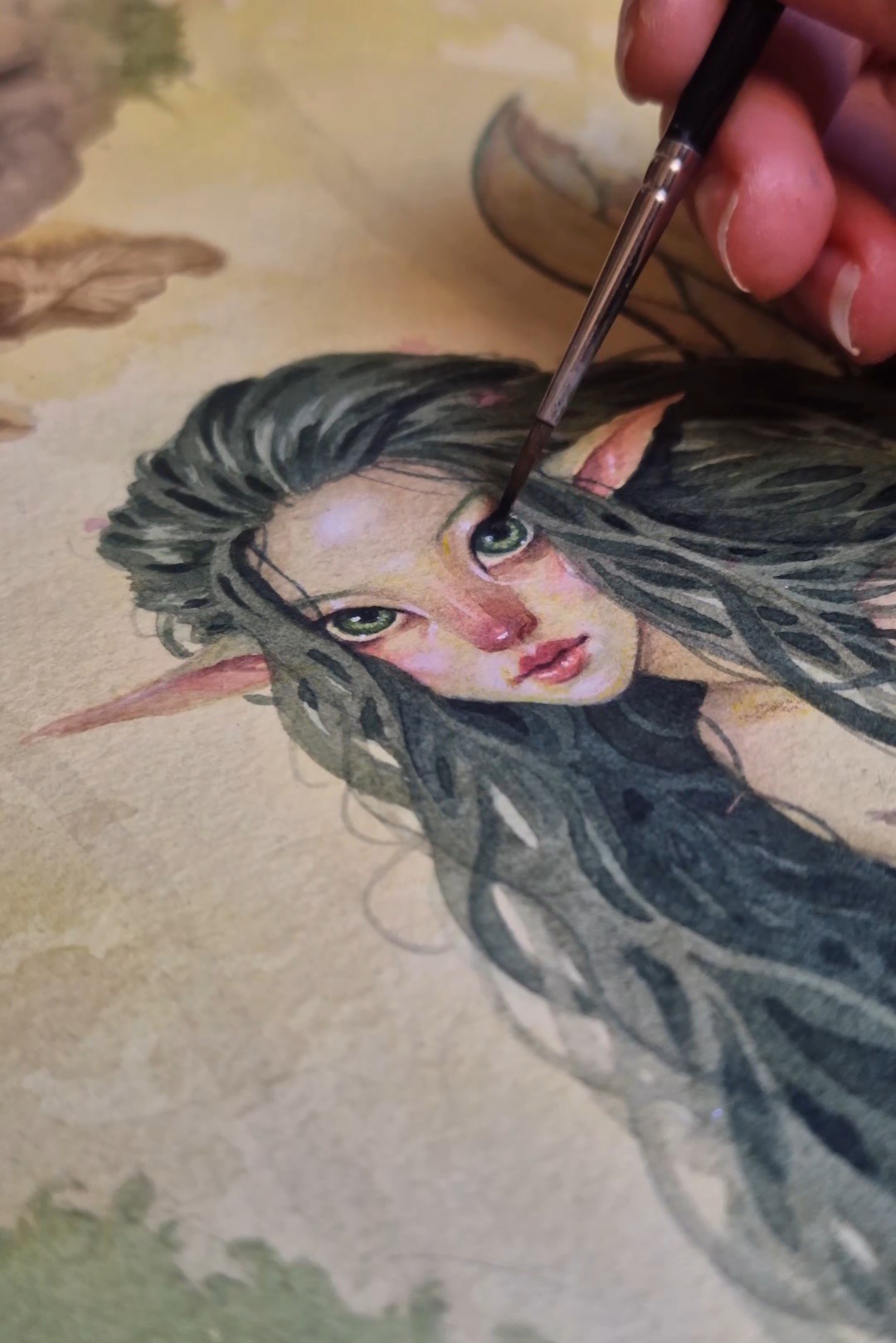
As I mentioned, I work primarily with pencils, inks and watercolours. Watercolour is a very challenging medium. I’ve been using it since I was 15 (I’m 31 now), yet I still have so much to learn. Some might think sticking to the same technique would be repetitive. In reality, however, it is a process of constant experimentation.
For example, I combine different types of paper and paint to see the results. I figure out what works best for each project. In addition, I feel the bristles of a new brush glide across the paper’s texture. All these things – and so much more – fill me with curiosity and excitement!
Learning to control the water is just like mastering a magic spell. If watercolour isn’t magic, I don’t know what is.
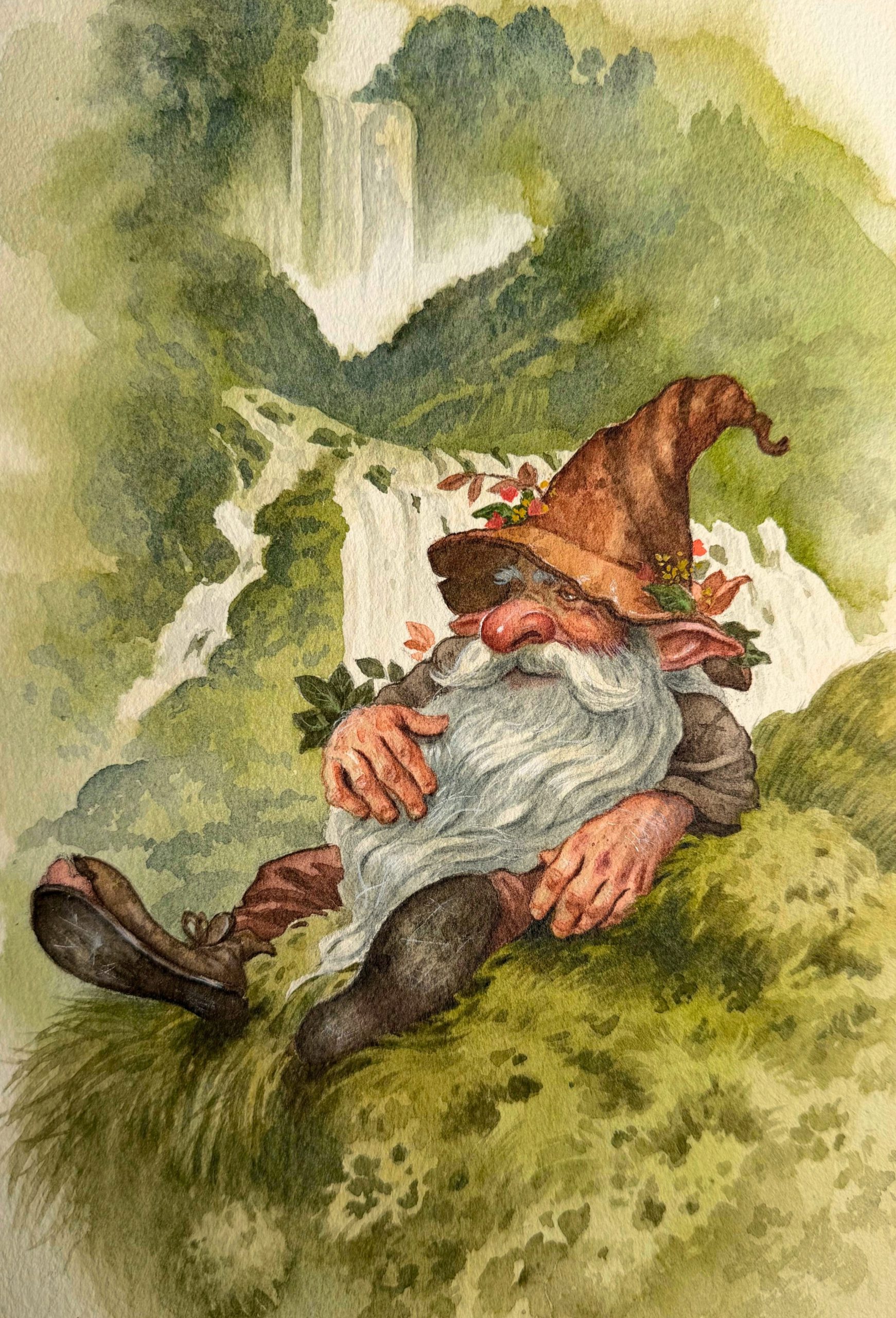
Which tools are especially important to your creative process? And is there a Hahnemühle paper you particularly enjoy working with? If so, what makes it special for your art?
Over the years, I have experimented with a wide range of materials. Comparing tools with different properties and at different quality levels is certainly useful for an artist’s growth. I now know for a fact that high-quality paints, paper, and brushes make a real difference in my work.
My favorite paper is Lanaquarelle cold-pressed. I found it perfect for my work from the very first use. I like its fine grain. It is visible enough to add texture to the paint, yet smooth enough for pencil sketching.
Above all, I find it very easy to manage water application and drying times. I love working with glazes, a process that requires patience and time. So, finding a paper that accommodates that pace is not something you can take for granted!
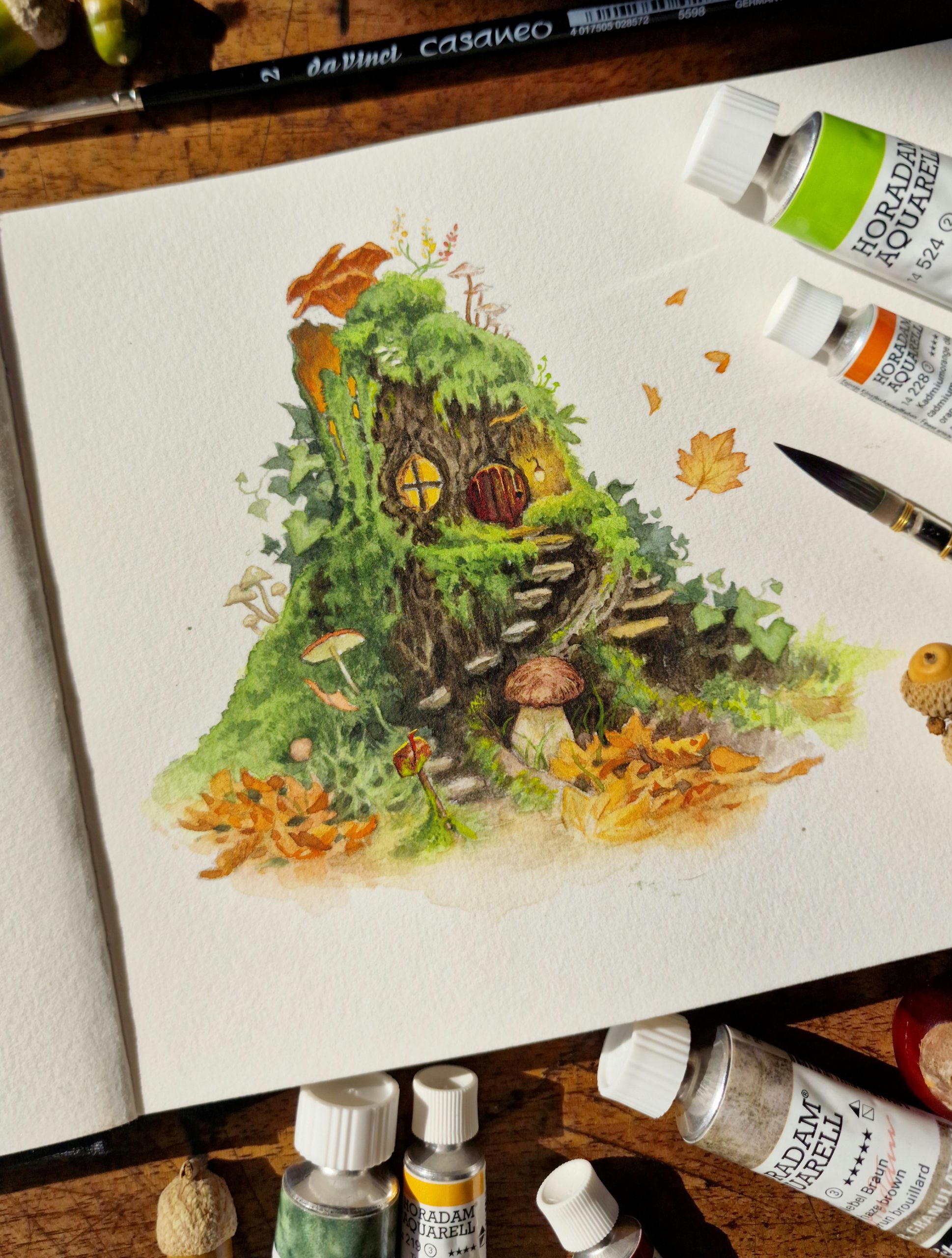
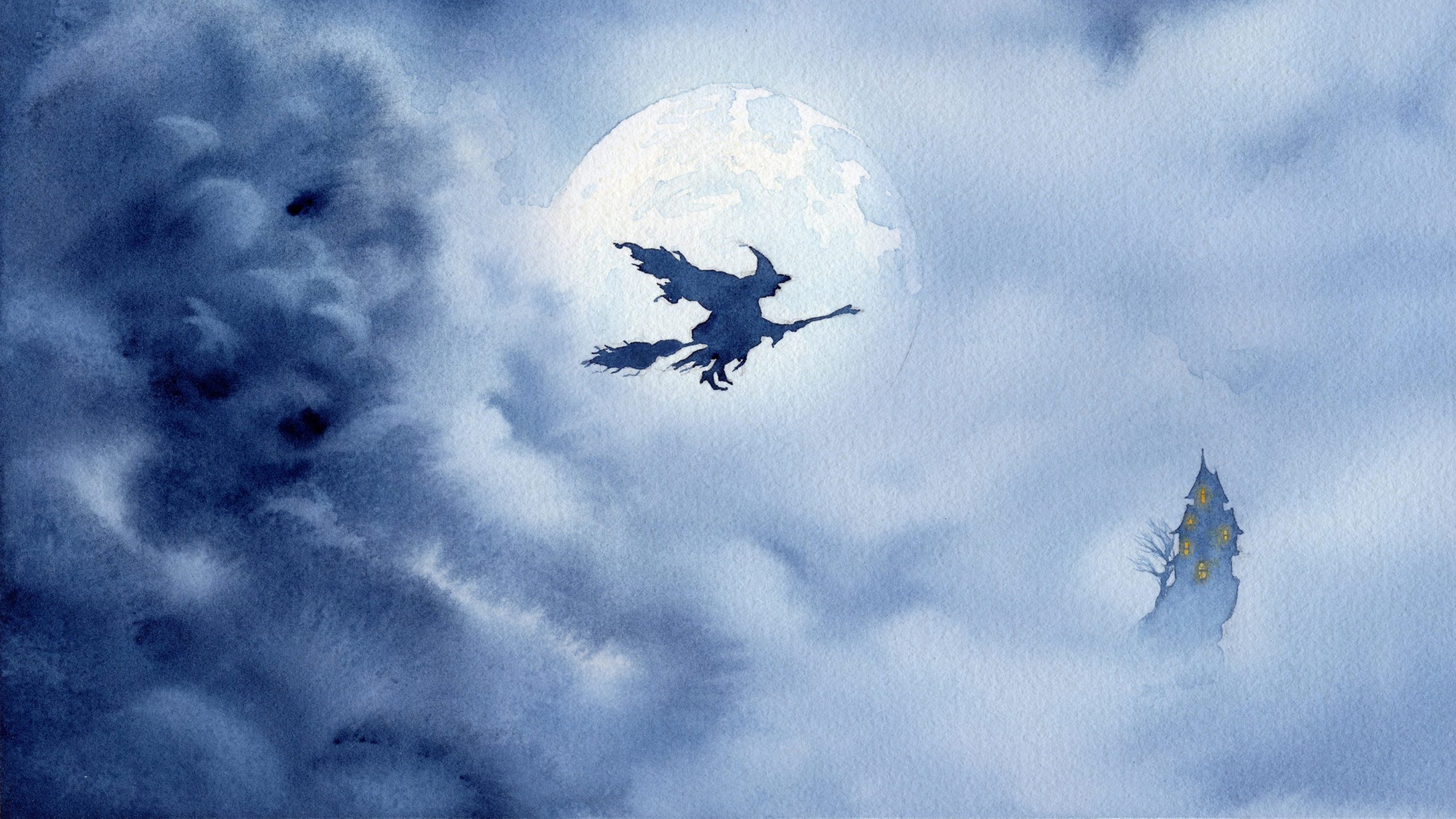
Is there a piece, series or project of yours that is especially close to your heart?
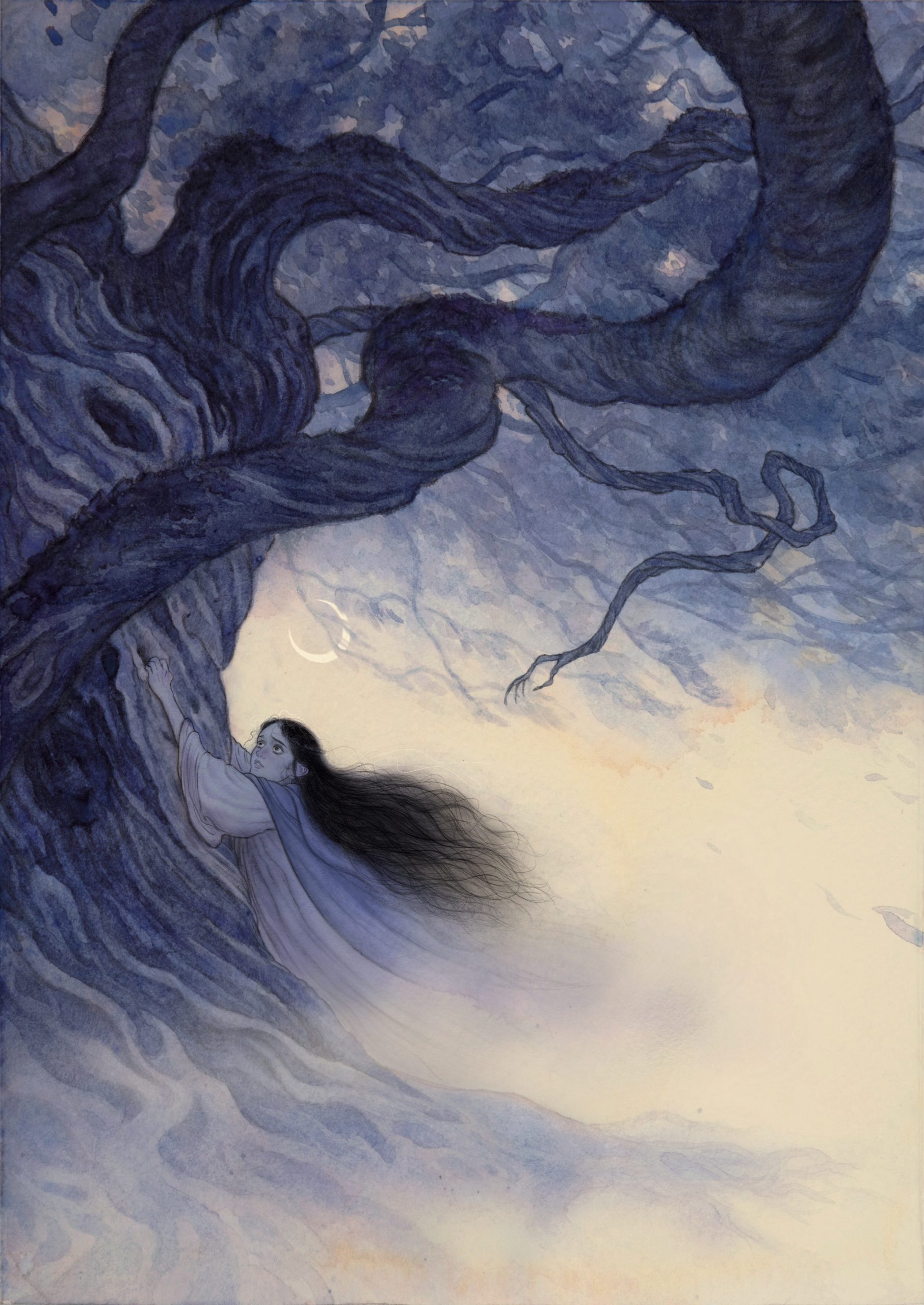
In truth, I am fond of all my works to some extent, even those I am less satisfied with. If I had to choose, however, the one closest to my heart would be my first fully illustrated novel. It is “Le Falene di Ursula”. It is a wonderful gothic story inspired by the life of Ursula Sontheil, a witch from English folklore.
The project had a very tight turnaround. As a result, it really put my “slow” watercolour process to the test. Yet rising to that challenge was deeply satisfying. It was also a beautiful experience to work with an author with whom I formed a strong bond.
My work often brings me into contact with people who carry a touch of magic within them. For that, I am grateful.
Finding one’s own artistic voice can be a long and personal journey. What has helped you most along the way?
I feel like I’m still at the beginning of the journey, but that doesn’t worry me. When I was younger, I was much more concerned with being original or standing out. However, that mostly led me away from what I truly enjoyed. Ultimately, as I moved forward, I paradoxically decided to go back. I returned to the very things that first drew me to illustration and that I was most passionate about. Since then, I’ve tried to create work that makes me happy. I try not to focus on what I imagine people expect from a successful illustrator.
If success doesn’t come, at least I’ll have been happy!
When people look at your work, is there a certain feeling, thought or sense of wonder you hope to evoke?
I would love for people to feel like they’re allowed to dream without judging themselves as frivolous for doing so. But it would also be wonderful if it simply inspired them to take a walk in nature!
Do you have any advice for creatives who have just begun making art and are still exploring their own style?
Actually, there are a few things. While I draw, I usually have plenty of time to think about what I’d say to my past self! First, I’d tell them never to forget what drove them to start in the first place. That way, they can keep enjoying the journey and stay curious.
It’s easy to spoil the creative experience with self-criticism or by demanding too much from your art. At the same time, I don’t think there’s anything wrong with wanting to improve your technique through discipline. Mastering it allows you to express yourself more easily. It is also good to look up to artists who inspire us. However, we should try not to compare ourselves too harshly or expect to skip steps.
Finding “our own style” should be a gradual, natural process. It should reflect who we are at a specific point in our journey. So, it is only right that it evolves along with us. When it comes to creativity, consistency can be a stifling cage.
Last but not least, is there anything you are currently working on or looking forward to sharing soon?
Over the past few months, I’ve illustrated several book covers that won’t be released until autumn. I’ve had the opportunity to work in both watercolour and digital media. Being able to switch between techniques was really exciting. As I mentioned earlier, experimenting is one of the things I love most about this job.
I can’t wait to hold these books in my hands and share them with others. As is likely clear by now, making my younger self proud is very important to me. These projects, in particular, would have made her eyes light up. That brings me great satisfaction.
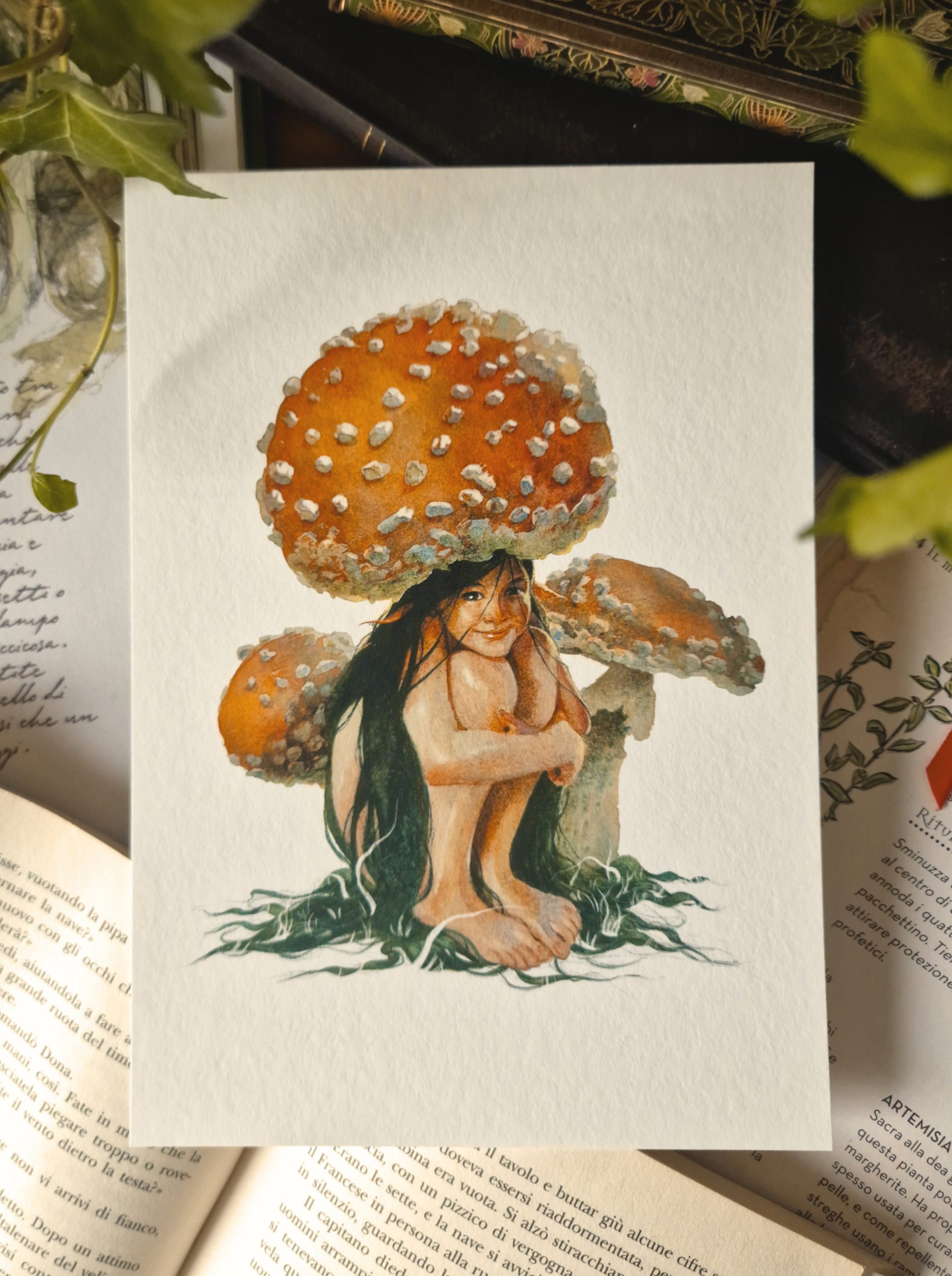
Thank you so much, dear Ilaria, for sharing these personal insights into your creative world and artistic process with us. It was wonderful to learn more about the inspiration, imagination and love for nature behind your illustrations. We wish you all the best for your upcoming projects and look forward to following your creative journey.