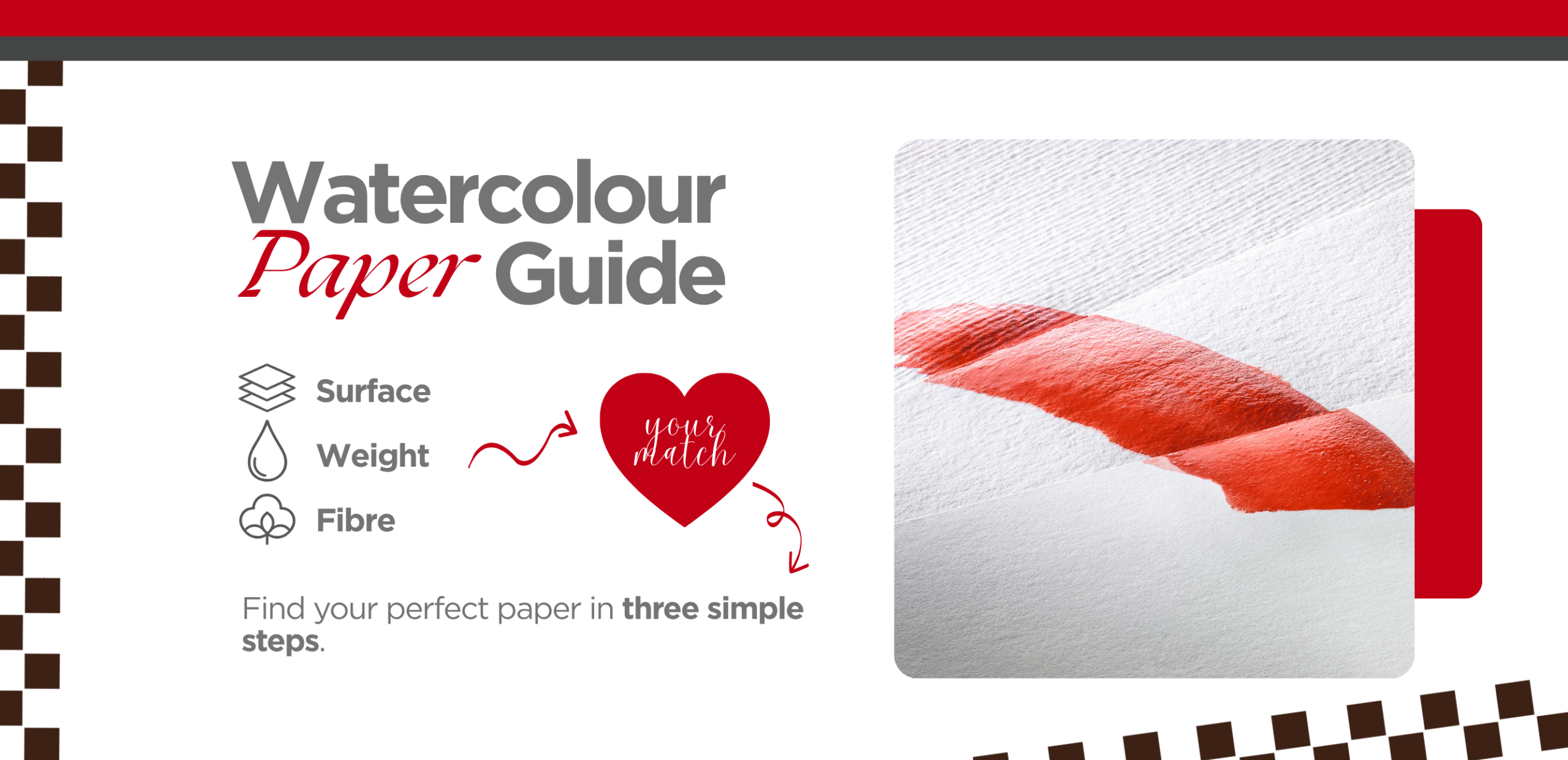
With such a wide range of artist papers available, choosing the right one is not always easy. Surface, weight, fibres and format all shape the way colours, techniques and ideas come to life on paper. In this guide, we explain the key differences and help you find the paper that best suits your creative way of working.

Step 1: Choose the right surface texture
The surface texture of a paper affects how colours behave, how brushes glide across the paper and the overall character of the finished artwork. Depending on your painting style and technique, a smooth, lightly textured or rough surface may be the ideal choice.
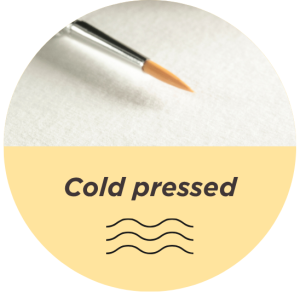
Cold Pressed
If you are looking for a versatile watercolour paper, Cold Pressed is the right choice.
The lightly textured surface combines smooth colour transitions with the possibility of working out fine details. Both wet-on-wet techniques and dry-brush painting can be achieved with ease. This makes the matt surface suitable for almost any subject and an excellent choice for both beginners and experienced artists.
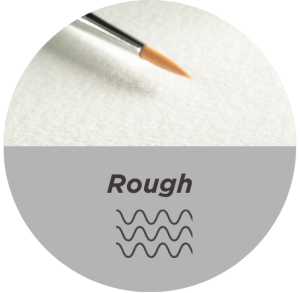
Rough
If you love expressive textures and lively effects, Rough is the right choice.
The pronounced surface texture becomes part of the subject itself. It creates characterful brushstrokes, supports exciting light-and-dark effects and brings out granulation as well as wet-on-wet techniques particularly beautifully. Ideal for landscapes, dramatic skies and a loose, expressive painting style.
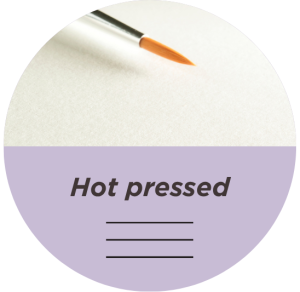
Hot Pressed
If you want to work precisely and develop the finest details, Hot Pressed is the right choice.
The smooth, hot pressed surface ensures brilliant colours and allows controlled glazes as well as clean lines. Illustrations, botanical subjects and mixed-media techniques with fineliners and coloured pencils especially benefit from the fine paper surface.
Step 2: Choose the right paper weight
In addition to the surface, paper weight also plays an important role. Grammage refers to how heavy a paper is per square metre. As a rule, the higher the grammage, the more stable the paper is when working with water.
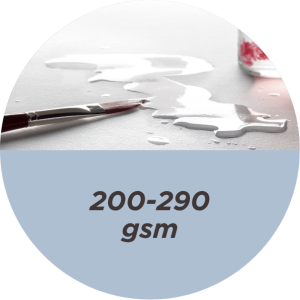
Light paper weight 200-290 gsm
If you like sketching, practising or working with little water, a lighter paper weight may be a good fit.
It is particularly suitable for quick studies, dry techniques and light watercolour sketches, for example with watercolour pencils.
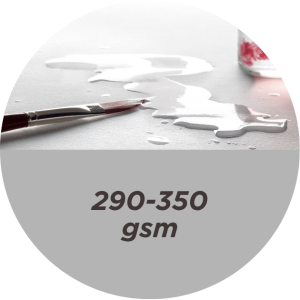
Medium paper weight 290-350 gsm
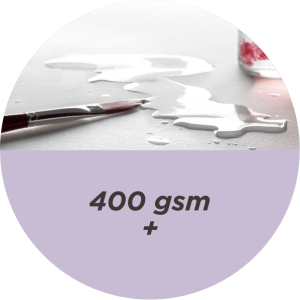
Heavy paper weight 400 gsm +
If you work with a lot of water, multiple layers or experimental techniques, a heavy paper weight offers more stability.
Heavy papers absorb more moisture and remain more dimensionally stable even with more intensive techniques. They are particularly suitable for large-scale wet-on-wet techniques, strong colour applications and repeated glazing.

Step 3: Choose the right fibre composition
Not only surface and weight influence the painting result – the paper fibres also play an important role. Among other things, they determine how much water the paper can absorb, how colours flow and how well glazes or corrections can be carried out.
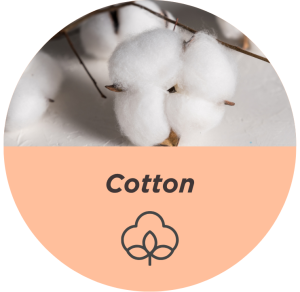
Cotton
If you often work with a lot of water, multiple glazes or demanding watercolour techniques, cotton is the right choice.
Cotton fibres are naturally soft yet highly robust. They absorb water and pigments evenly, allowing smooth colour transitions and greater control when glazing, correcting or working wet-on-wet. Thanks to their stability, cotton papers are also ideal for multiple layers and generous amounts of water.
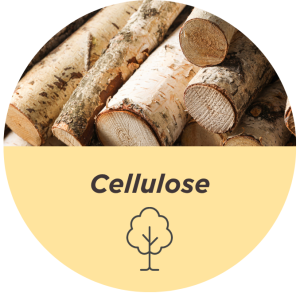
Cellulose
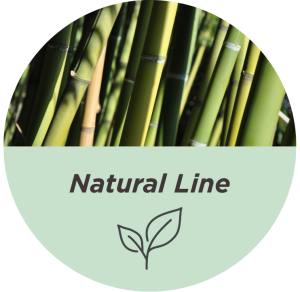
Natural Line
If you are looking for more sustainable alternatives to classic artist papers, our Natural Line is well worth a closer look.
Alongside classic cotton and cellulose papers, our Natural Line offers exciting alternatives made from fast-growing raw materials such as bamboo, agave, hemp or sugar cane. The result is high-quality artist paper that combines creative performance with a more mindful use of resources.
Our recommendations
Choosing the right paper always depends on your personal style and your techniques. Use the following recommendations as a guide and discover which paper suits you best.
🎨 For all-round use
Ideal if you are looking for a versatile paper for most watercolour techniques.
Cotton, Cold Pressed, 250–300 gsm
Recommended products
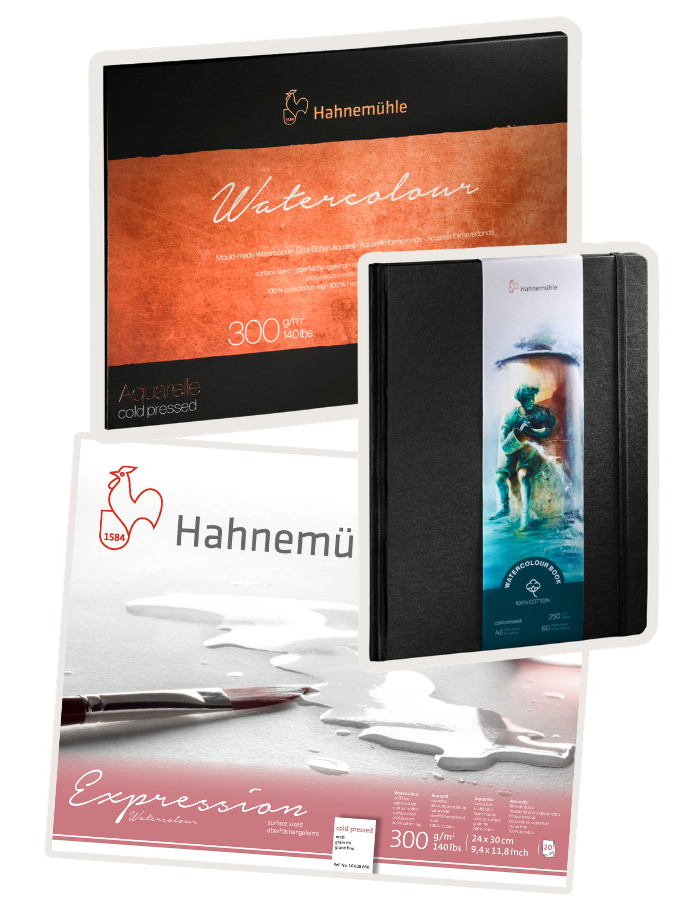
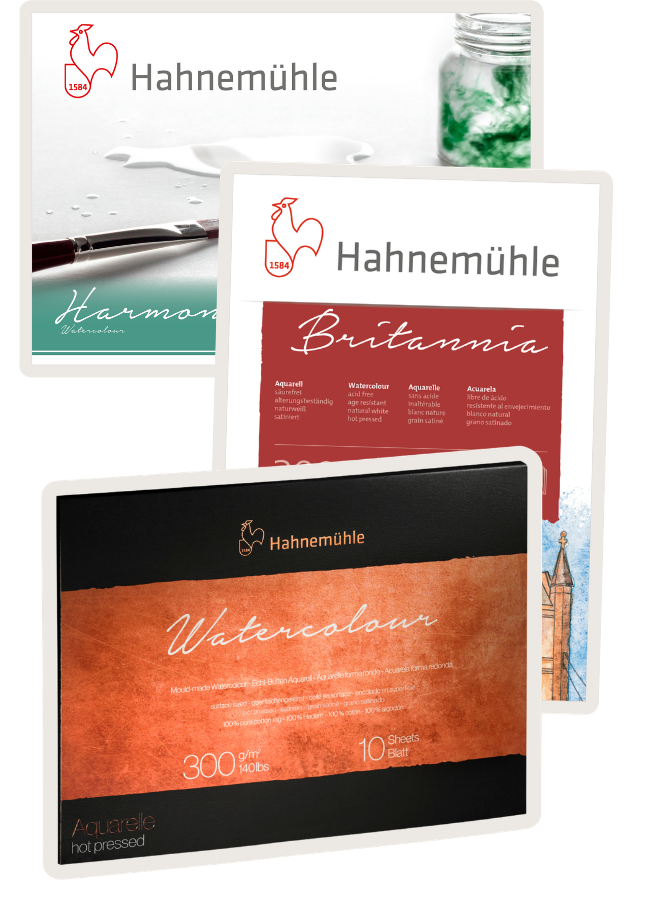
✏️ For fine details & precise work
Perfect for illustrations, botanical subjects and controlled glazes.
Cotton / Cellulose, Hot Pressed, 300 gsm
Recommended products
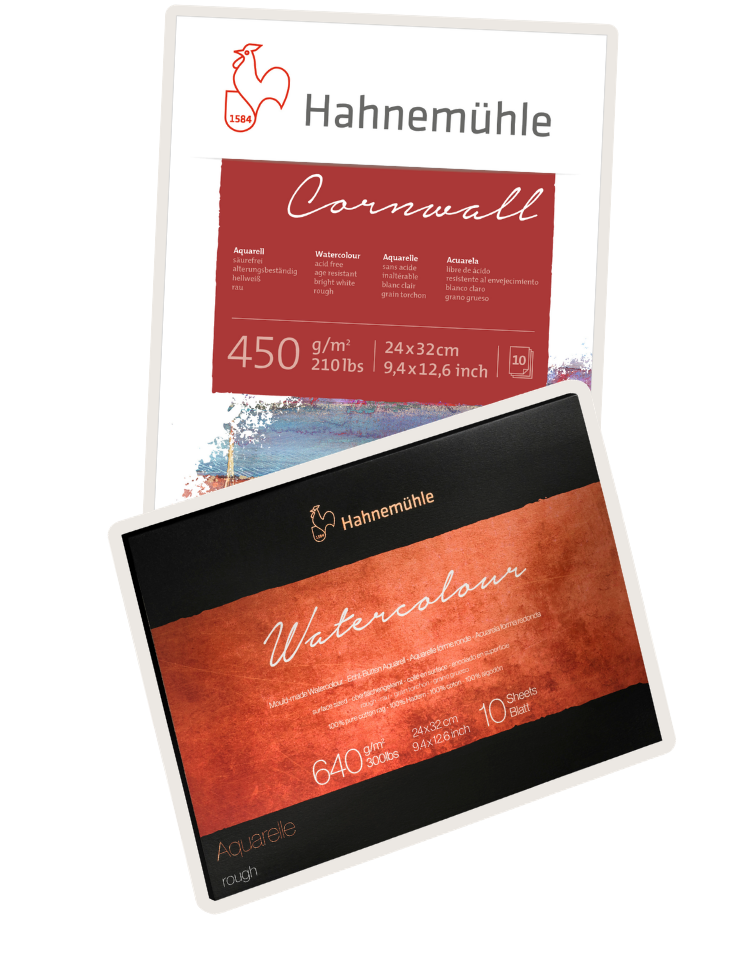
🌊 For expressive effects
For loose painting styles, strong textures and plenty of water.
Cotton / Cellulose, Rough, 400 gsm +
Recommended products
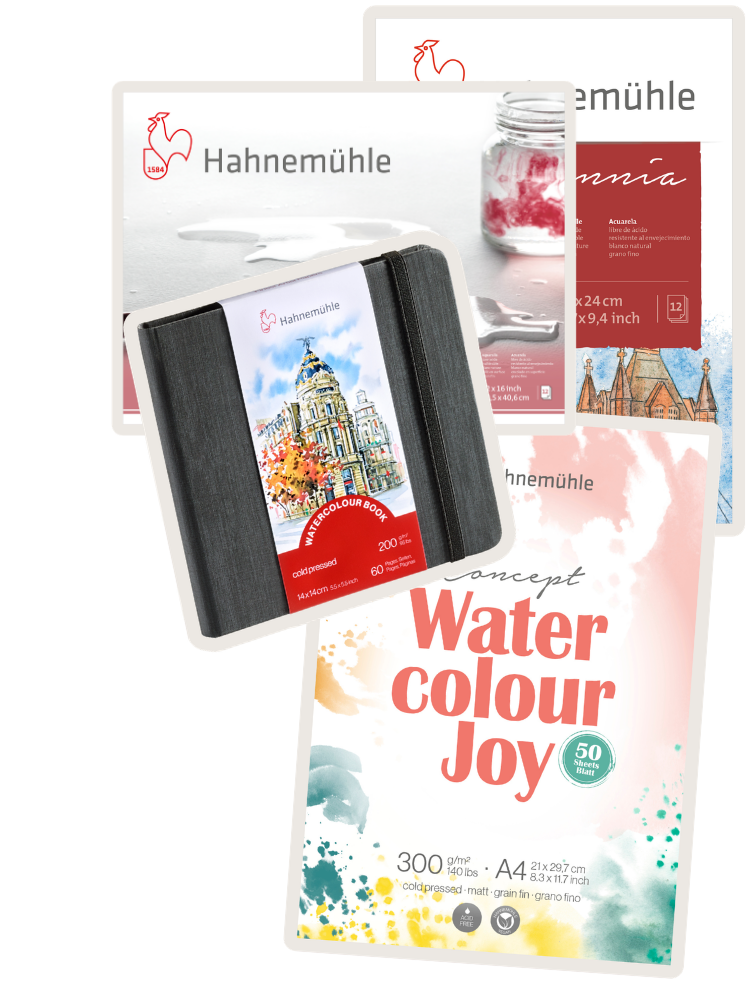
🌿 For everyday creativity
A versatile and budget-friendly choice for sketches, studies and regular painting.
Cellulose, Matt, 250-300 gsm
Recommended products
Discover even more possibilities
Choosing the right paper does not end with surface, weight or fibres. If you would like to try new formats, it is also worth taking a look at our special formats.
Special formats
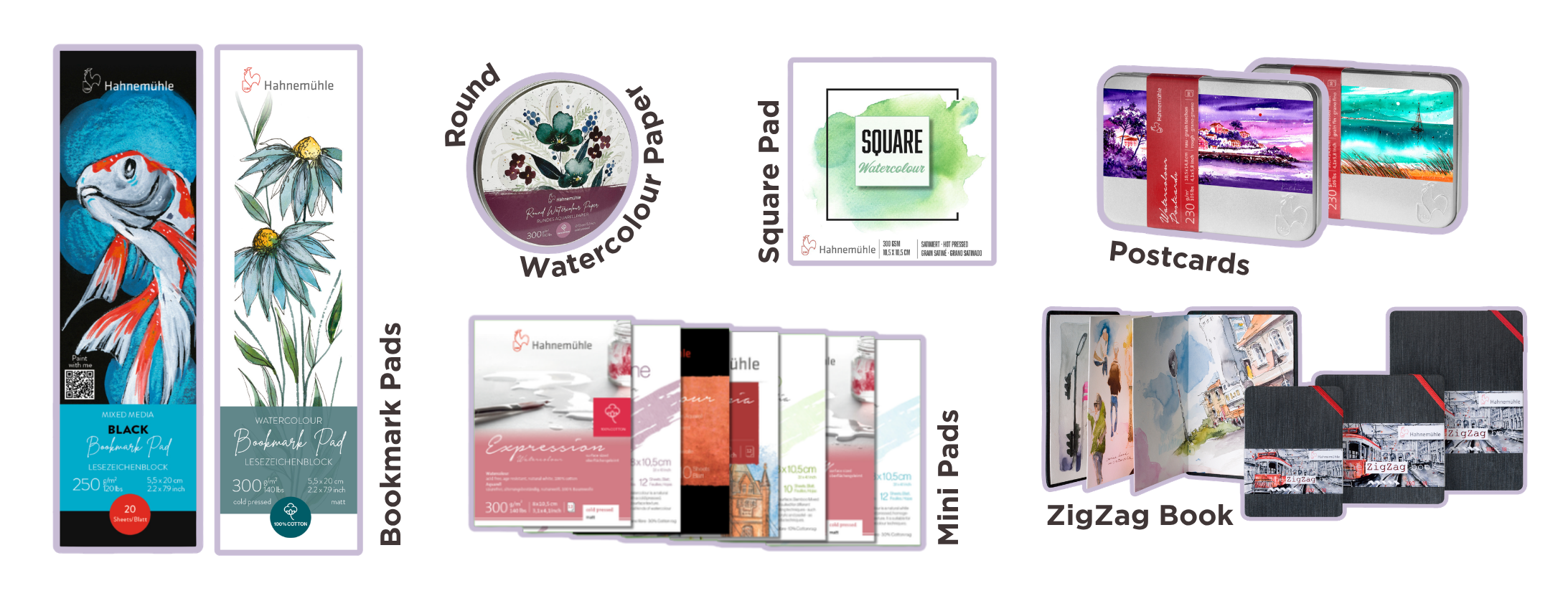
In addition to classic blocks and sheets, our Special Formats offer new ways to get creative – from Watercolour Postcards and Bookmark Pads to the Round Watercolour Box, square pads or ZigZag Books. Many of these formats are also ideal as creative gifts, for travelling or for seasonal projects.
Would you like to discover even more paper knowledge, creative inspiration and the latest news from Hahnemühle? Then follow us on our social media channels and stay up to date.