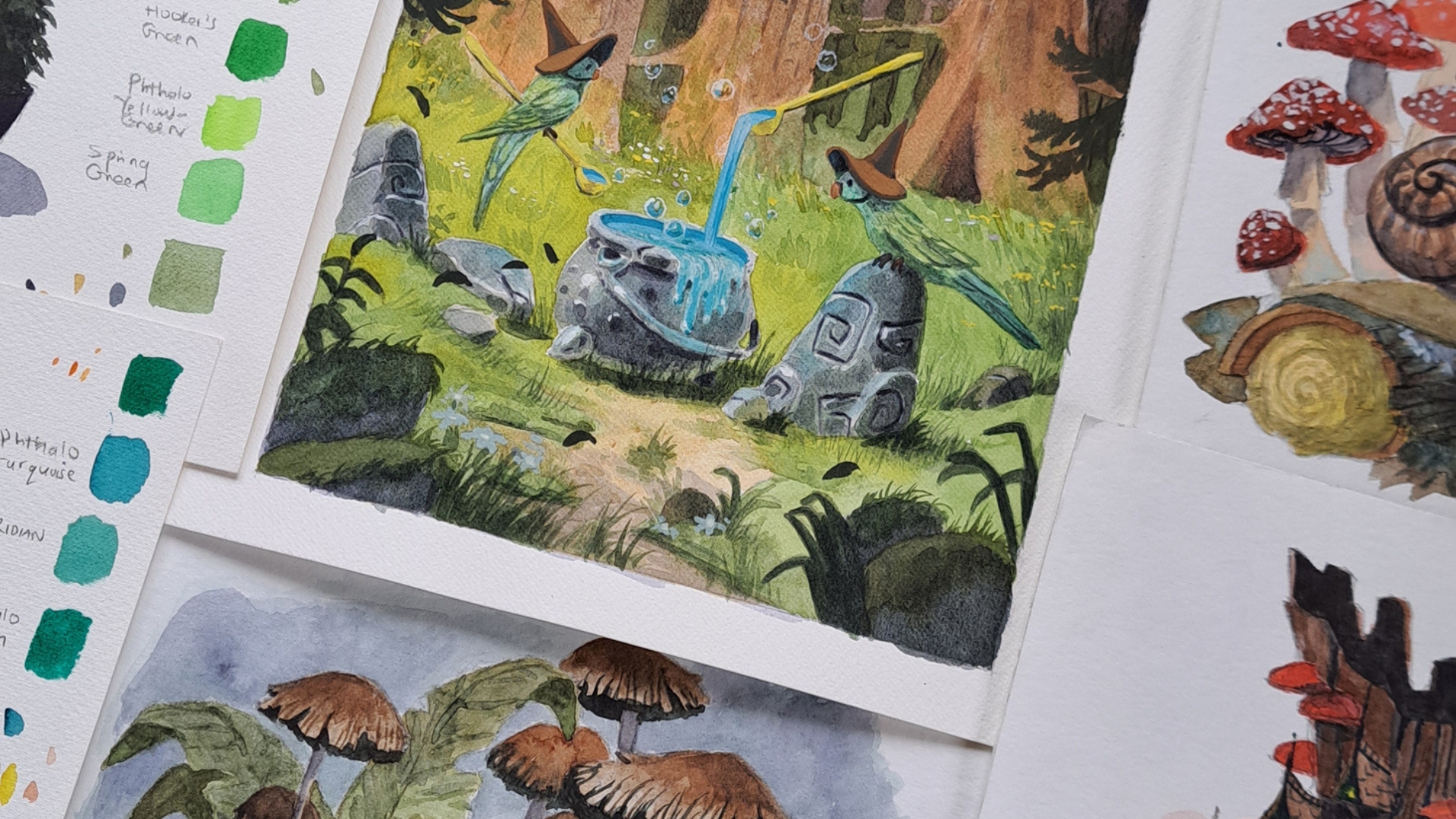
Hello Kiara, it’s a pleasure to have you with us for this interview. We’re very happy to learn more about you, your work, and especially your new book Watercolor Wizardry. Let’s dive straight into the first question:
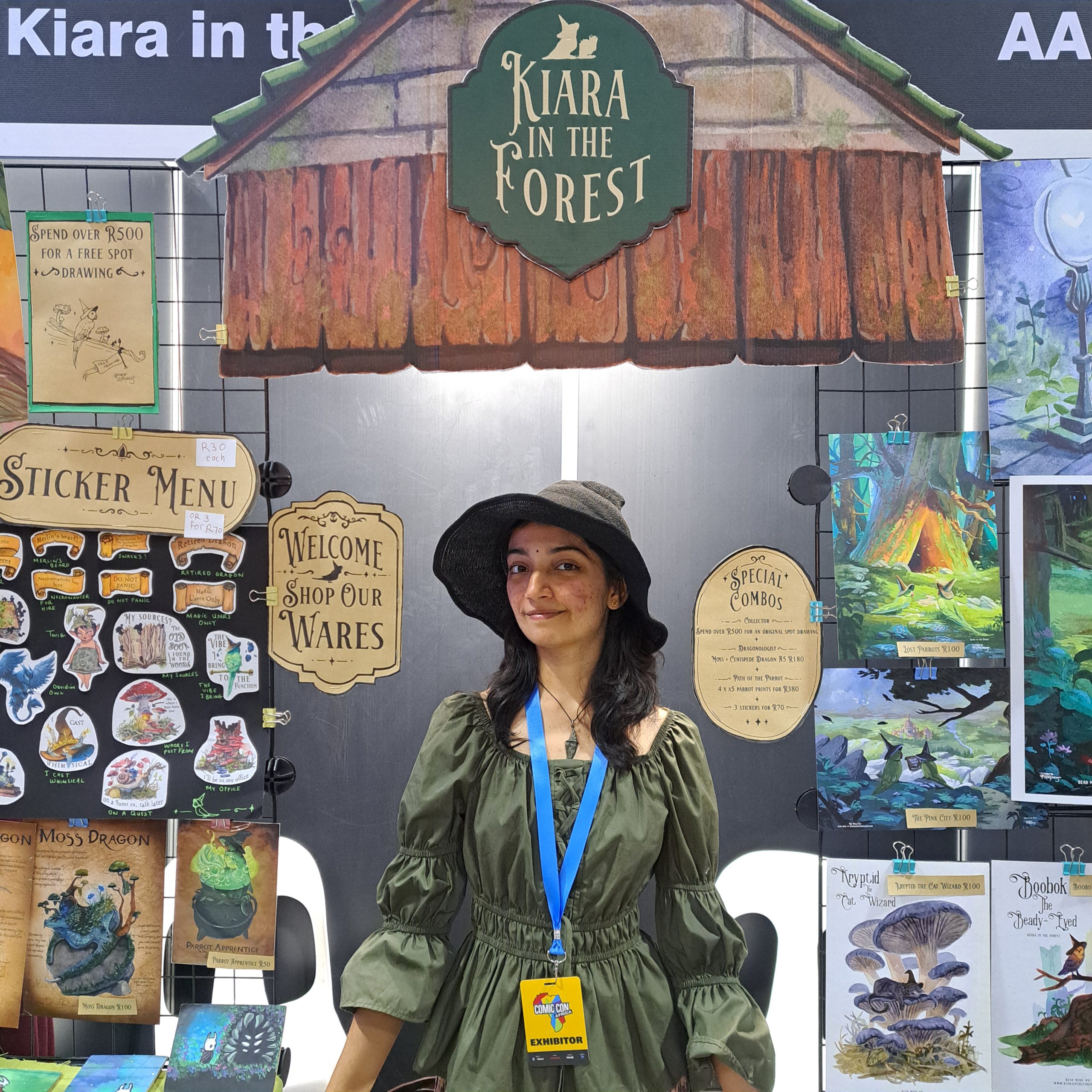
For readers who may be discovering you and your work for the first time: who is Kiara Maharaj, and how did your journey into the world of art begin?
My name is Kiara, I’m an illustrator and writer from South Africa. I have always enjoyed storytelling in whatever form I could get my hands on. When I was in primary school I had the tendency to make up new worlds and write short stories set in the world, and share them with my classmates. But the other children would be more interested in the stories when there were illustrations to go along with the writing, so I also began illustrating the characters, settings, and scenes. I just remember having so much fun all the time whenever I was drawing or constructing another world, so for me that’s how it began.
As both an illustrator and a writer, how do storytelling and visual art influence each other in your creative work?
I think visual art/illustration is one of the many forms of storytelling. In my personal journey, I was a writer first, primarily because it was such an accessible way of creating, I didn’t need any art supplies except for pen and paper. Writing stories was my coping mechanism, building new worlds on paper and describing them in as much detail as possible. I am also a lover of languages and all the different writing mechanisms are at the disposal of a writer. Short stories felt really powerful too, like telepathy. A story from my mind to yours. Over time as I could afford art supplies, I began experimenting more with other forms of storytelling, and now illustrating my stories is integral to my creation process, acting as something to catch a potential reader’s eye and immerse them in a new world.
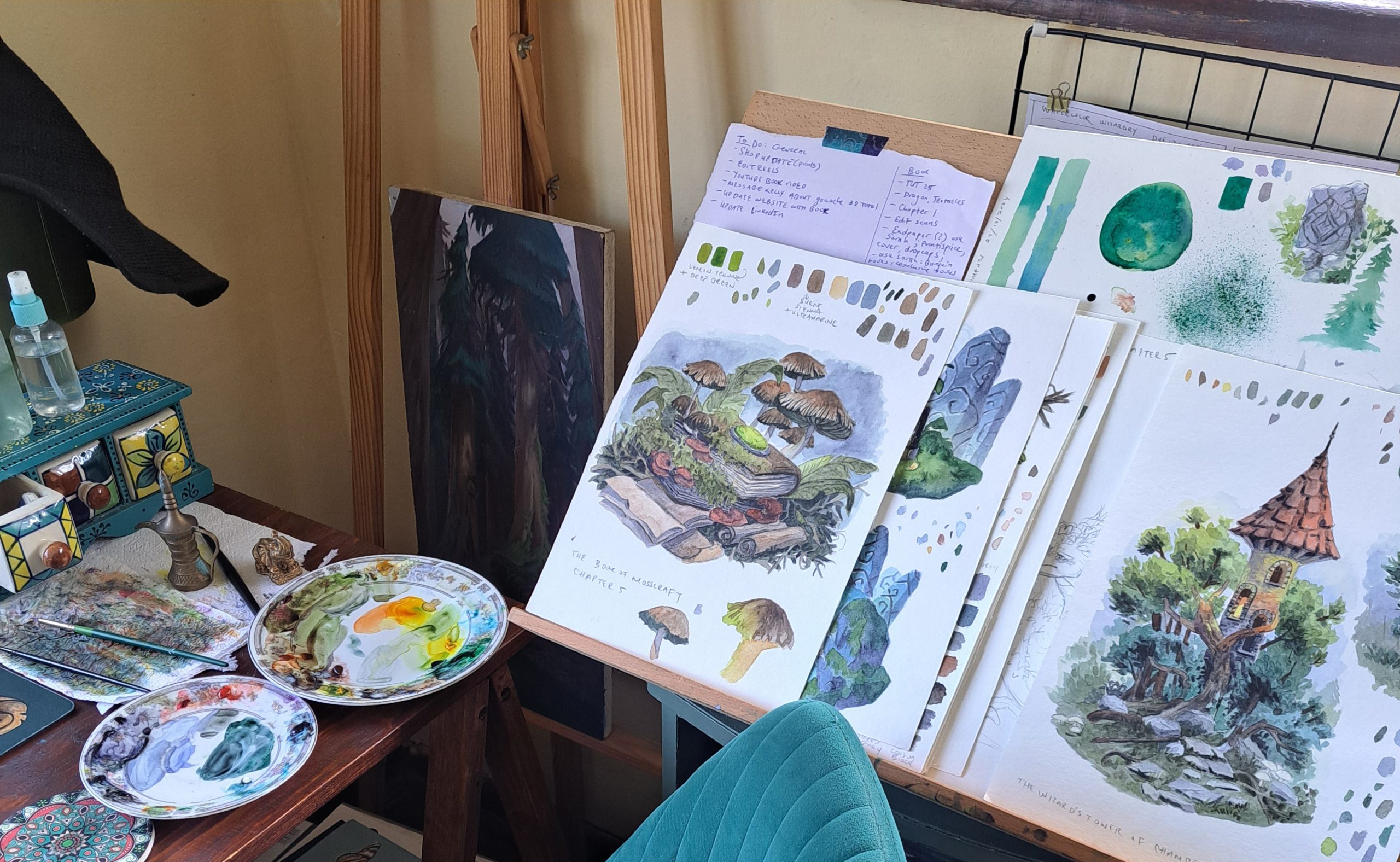
You work with watercolor and gouache in your illustrations. What do you enjoy about each of these mediums, and how do they complement each other in your work?
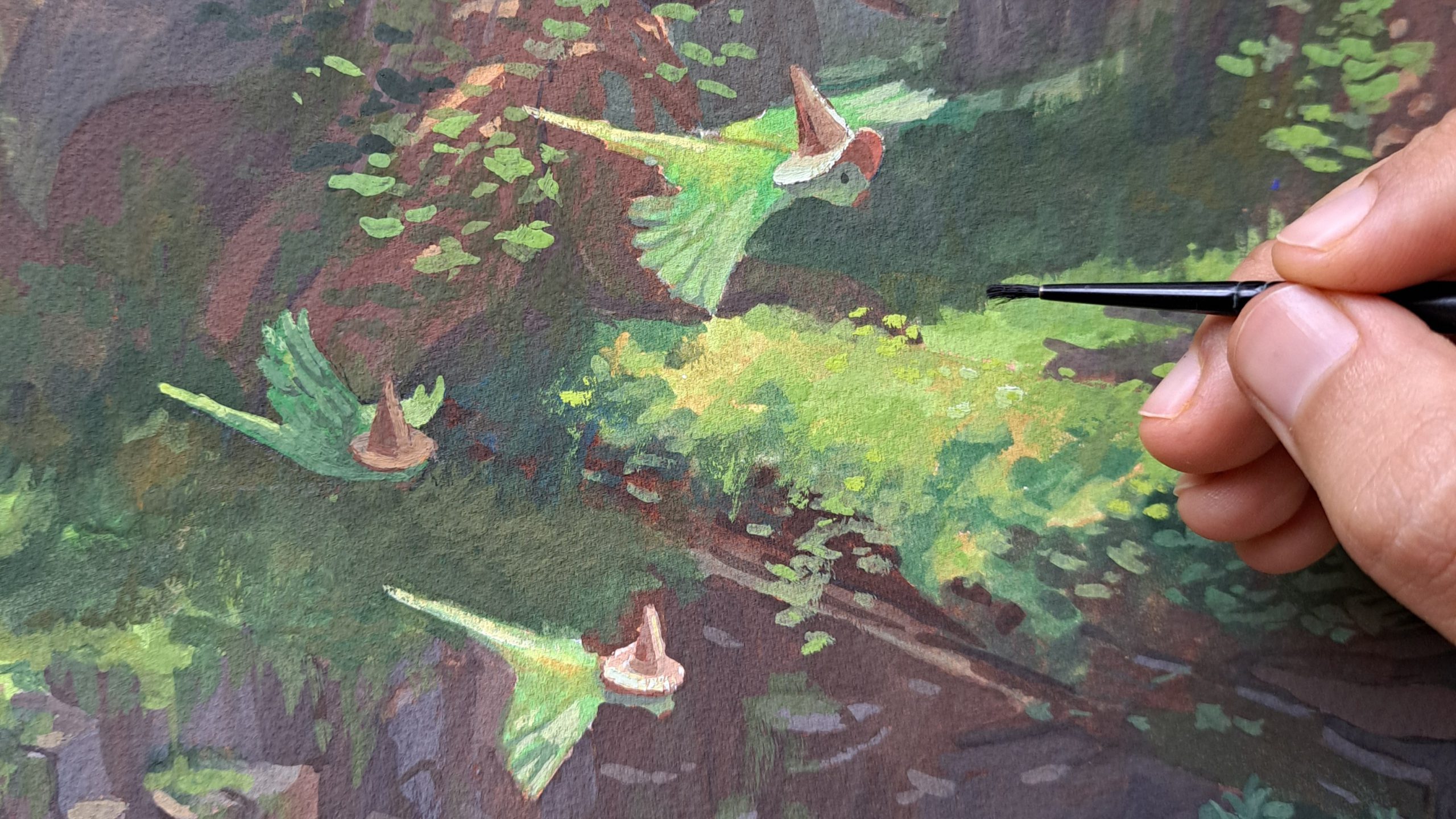
Gouache and watercolor are sisters. I first painted with watercolor and when I could afford to experiment I got my first set of gouache paints. Since then gouache has become my favorite medium because of its beautiful matt finish. The same techniques can be used for watercolor and gouache, such as wet-in-wet, dry brushing, etc, but in addition to that I love that gouache is more opaque. With careful layering and color mixing, a gouache illustration can look almost like a digital render, which I find incredibly satisfying. Now I use watercolor and gouache hand in hand sometimes, often using watercolor for the underpainting of a gouache illustration.
Could you tell us a bit about your typical creative process when starting a new painting or illustration?
It started when I feel inspired or get an idea for a new character, or adventure or setting. Usually I get the best ideas when I let my mind wander with no external noise. I like to think of it as noticing inspiration, instead of waiting to receive inspiration. For example when going for a walk, I might find an interestingly shaped tree stump, and find myself wondering what’s in the tree stump? How did the tree stump end up there? What does it do now? Does it have a name? Is it a friend or a foe? And a story starts developing from there. I will draw the tree in my sketchbook, and might not look at it again for years. Or it might turn into a larger painting and a completed short story answering all those questions.
With the technical side of my creative process right now, I like to first sketch a thumbnail in pencil, super rough and low stakes. I’ll develop that sketch into a more detailed drawing, then transfer the drawing onto watercolor paper, like my Agave Watercolour paper pad. Then I’ll use Payne’s Grey watercolor or Burnt Umber watercolor to complete an underpainting. Even if I use gouache for the final illustration, a watercolor underpainting helps me problem solve and decide where the light is, where the shadows are, the material of each object and more information before adding color. Lastly I paint each spot on the painting using gouache paint, mixing colors as I go, adjusting and readjusting. It’s the most fun part.
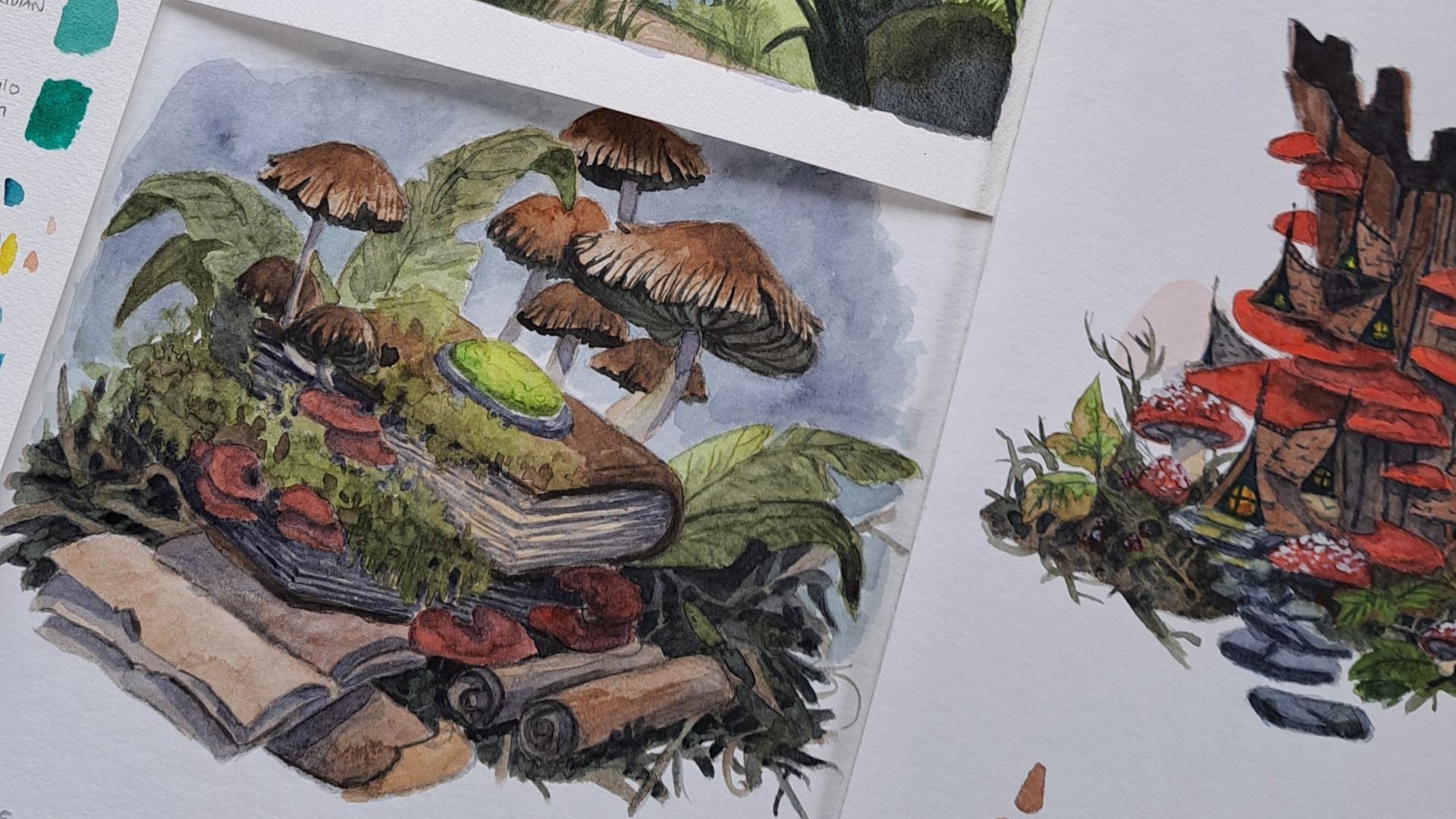
Your illustrations often depict magical forest scenes filled with plants, mushrooms and tiny creatures. What inspires you when creating these kinds of atmospheres and settings?
It’s true, most of my illustrations are of forests and magical trees. It started because I wanted to illustrate my fantasy short story series, The Polkadot Files, where the primary setting is a mysterious forest with portals on each tree. After that I just grew obsessed with painting trees and plants. Dark, dense, eerie forests hold so much magic, I just want to escape to them.
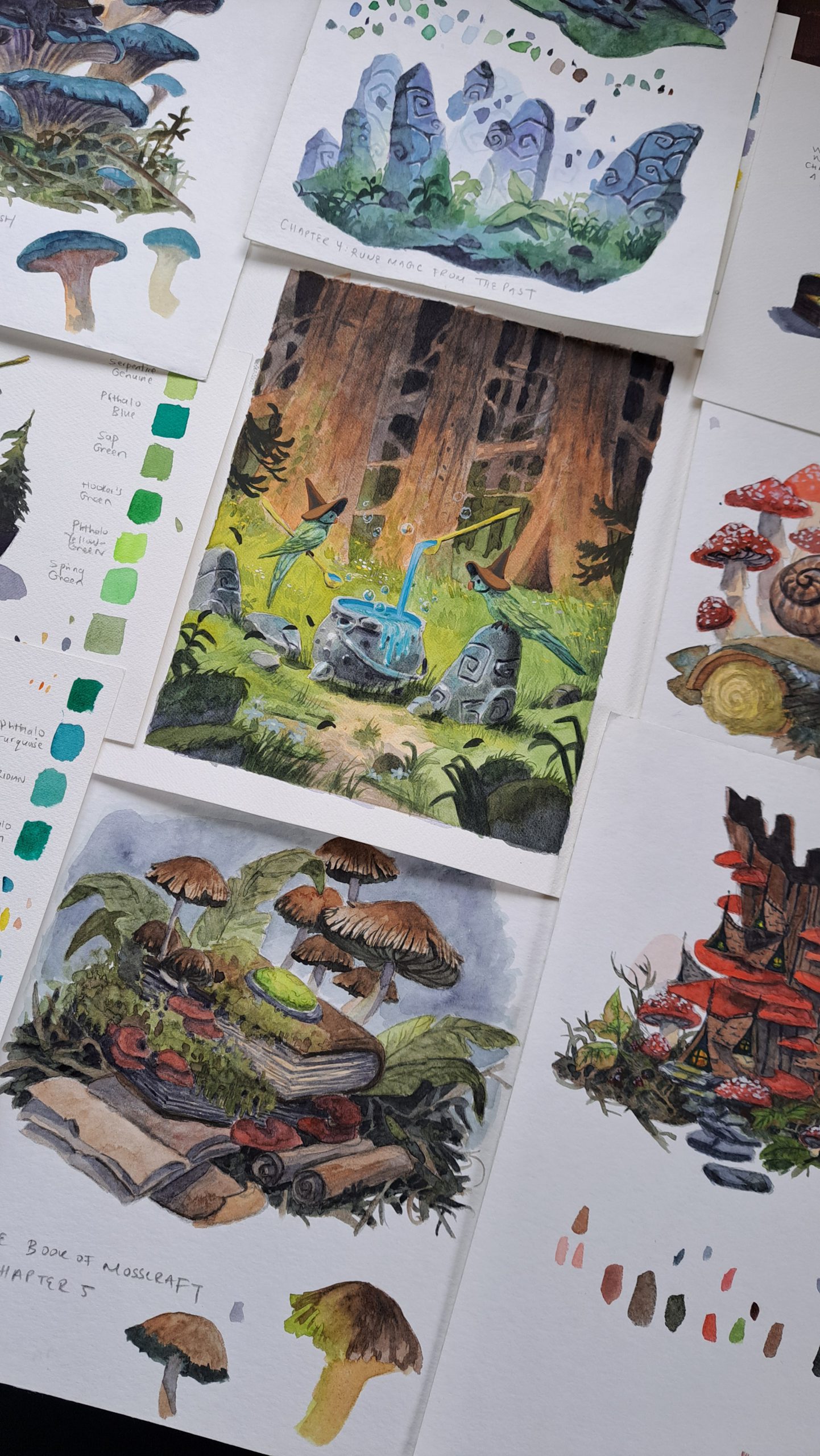
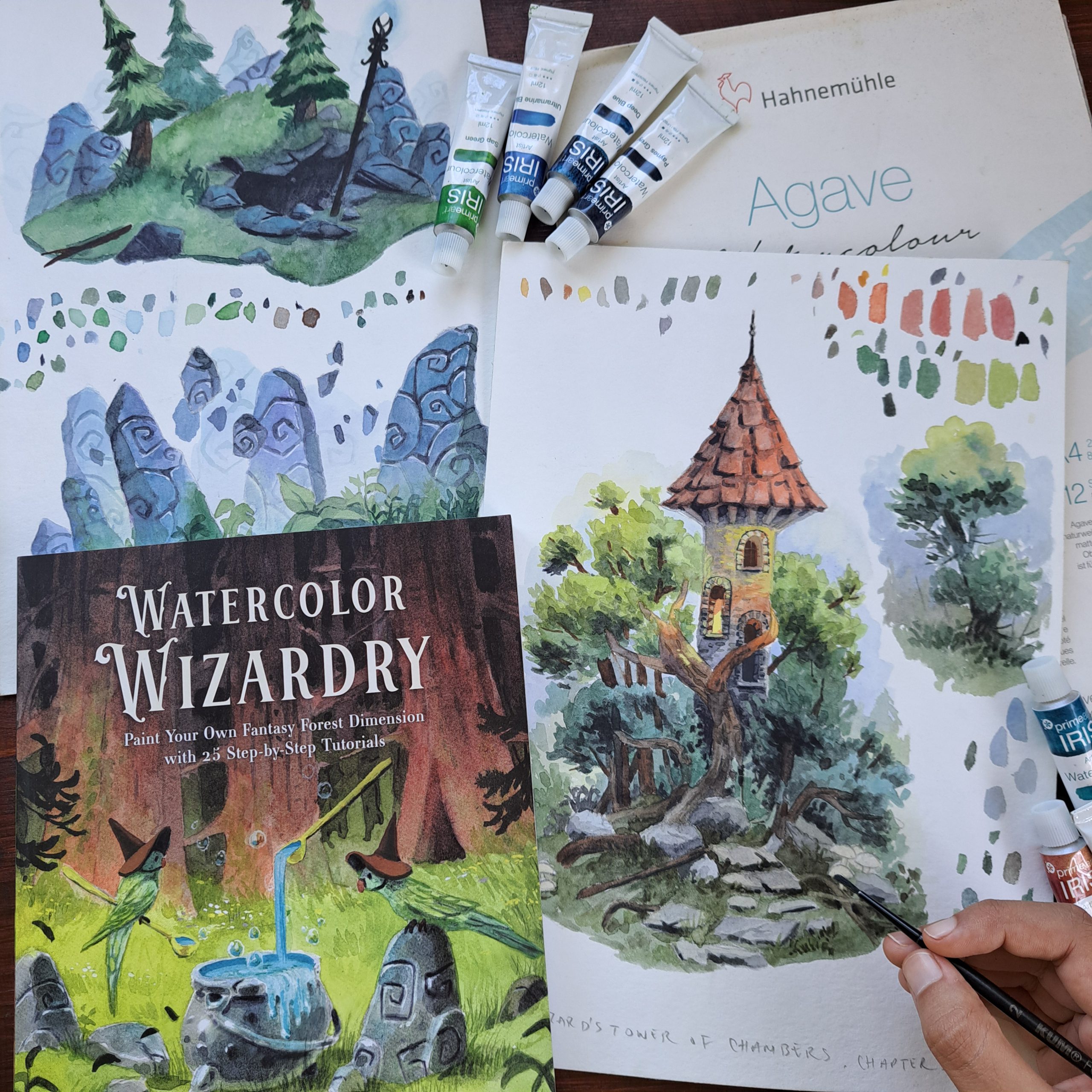
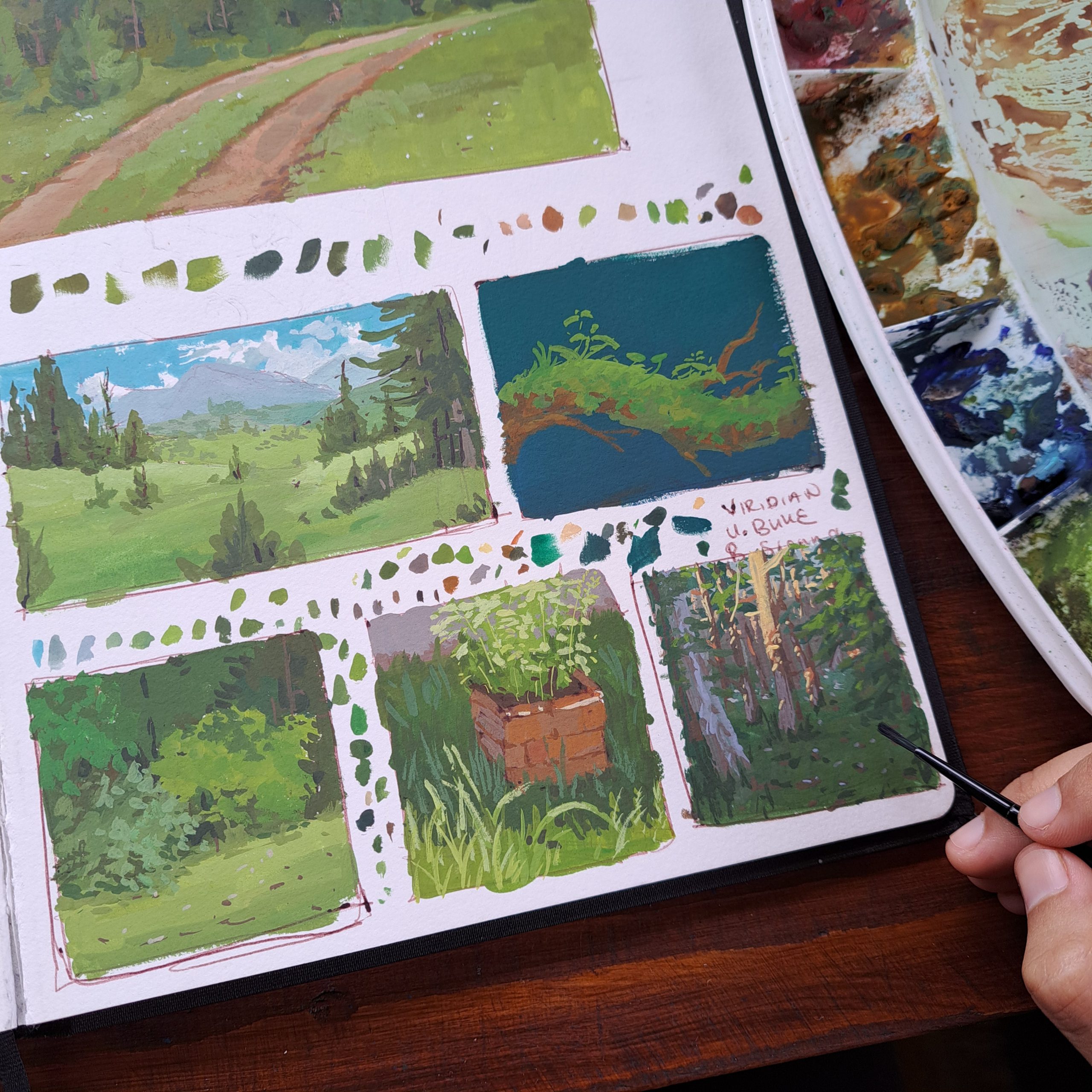
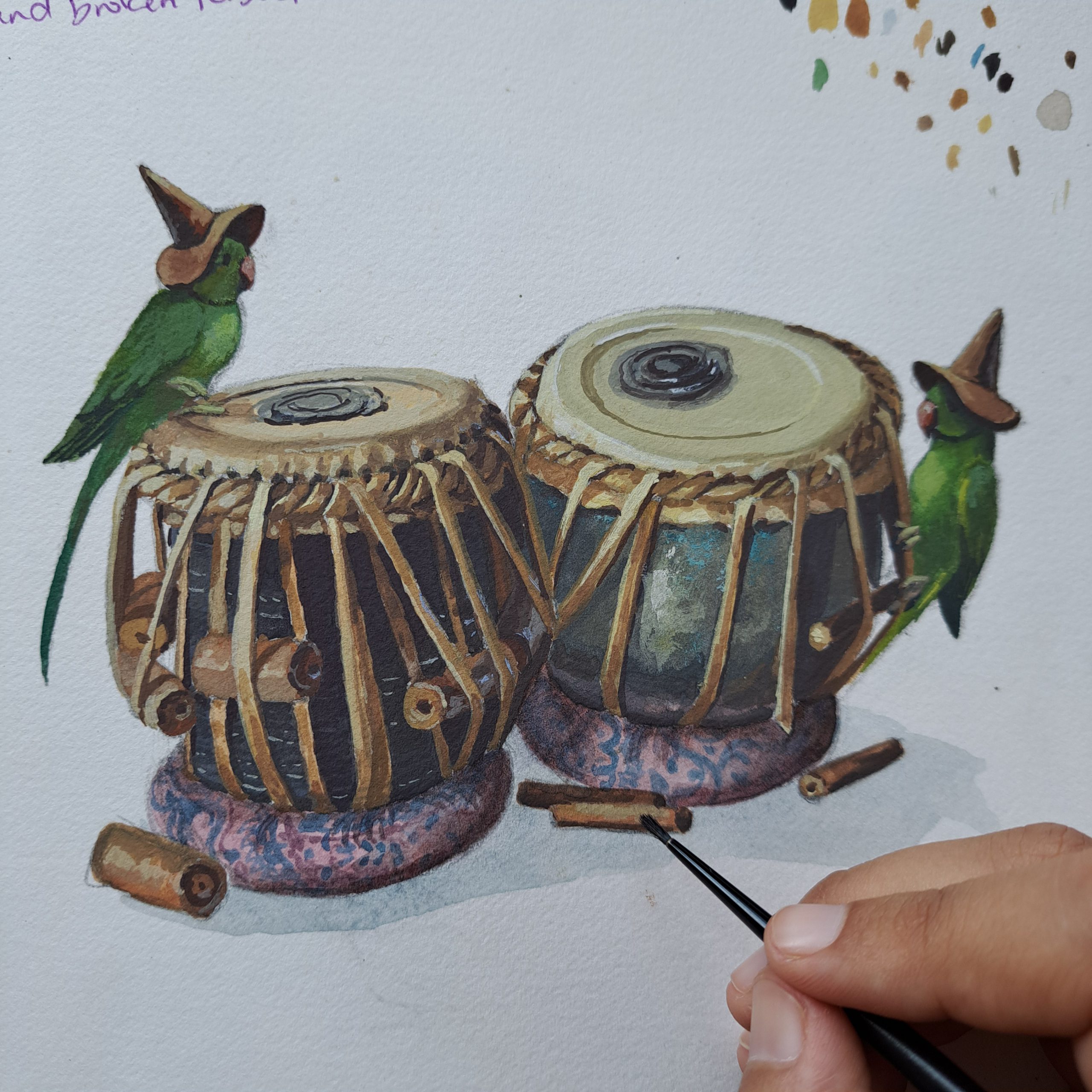
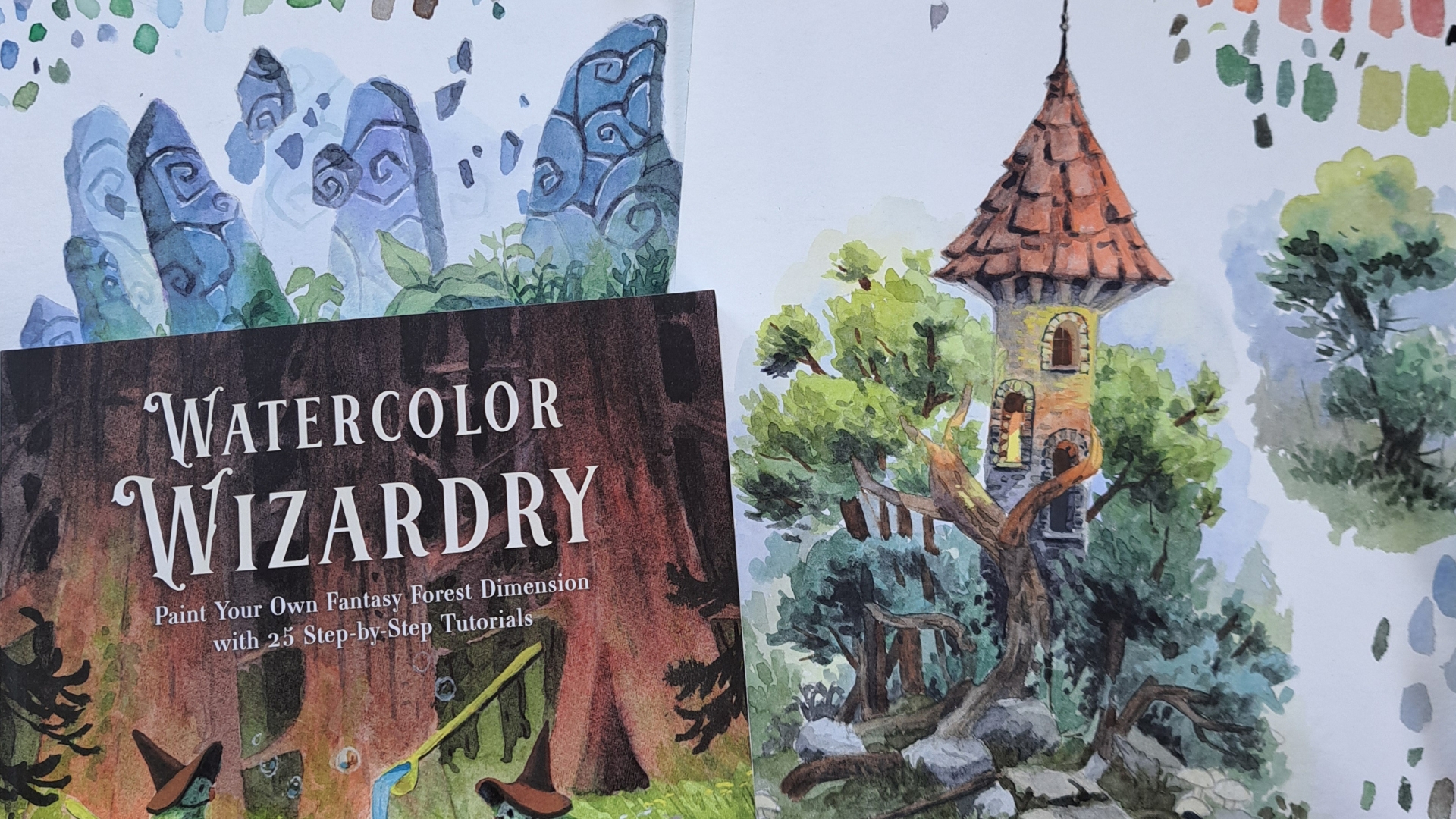
You recently released your new book Watercolor Wizardry, which also features these unique fantasy forest scenes. What inspired you to create this book?
I was approached by the publisher who wanted to explore potentially publishing a book together, and it would have 25 step-by-step tutorials on painting forest scenes in watercolor. Before this book I’ve only self-published my books, and have been looking for the opportunity to traditionally publish a book and learn from the process. So I was so grateful to take this opportunity, and my publisher encouraged me the whole way.
While creating this book, I stayed inspired by documenting the whole process, and writing daily “book logs” on my patreon blog. Seeing excitement from other people, and seeing how much joy it brings to somebody to paint a little mushroom on paper, busy with watercolor and time, makes me incredibly happy. I would love to paint more tutorial books to spread the joy of painting and rekindling your imagination.
The book combines watercolor tutorials with elements of storytelling and imagination. How did you come up with this interesting idea?
I am a book lover. I love the telepathic aspect of it. A book allows so much information to telepathically travel from one mind to another. Books also feel like a companion, sometimes I imagine them talking to me with their own personality. So growing up, if I found a book that was written in a more immersive or interactive way, it immediately gripped me. Some examples are Terry Pratchett’s Discworld series, and Lemony Snicket’s A Series of Unfortunate Events. These are authors who didn’t just write another world, but they spoke to the reader and whisked them away, and these are my biggest inspirations. So when writing Watercolor Wizardry, I was tasked to create 25 tutorials on how to paint fantasy forest scenes. But the storyteller side of me didn’t want it to be just another tutorial book. I wanted to make it more immersive while learning along the way.
What was most important for you when designing the tutorials so readers can successfully follow along and build their skills?
I think the most important thing was sharing as much information as possible in each step of the process. I wrote the exact color mixtures for each new step and furthermore why these colors were picked, which is something I needed when I was first learning to paint. So it was intended to not just be a follow along, straightforward tutorial, but more in-depth to equip the reader with skills to potentially build their own style and technique. Another important aspect I tried to include throughout the book was consistently encouraging the reader and praising them for their effort so far. Reminding them that there is no mistake or chance of doing something wrong. Painting is meant to be freeing and meditative, tingling your imagination. So I tried to include those reminders in the book wherever I could.
Who would you say the book is especially for – beginners, experienced artists, or anyone who enjoys painting imaginative worlds?
Yes to all three! I think beginners will benefit a lot from the challenge in each tutorial and absorb all the information about watercolor painting that I wish I knew when I was beginning. Experienced artists can appreciate seeing the process of another artist and even give the tutorials a go and change up the scenes how they imagine it to be. Of course, it is for everyone who enjoys escaping to another world. After all, the book invites you to imagine yourself as a wizard, showing you that painting with watercolor is basically wizardry.
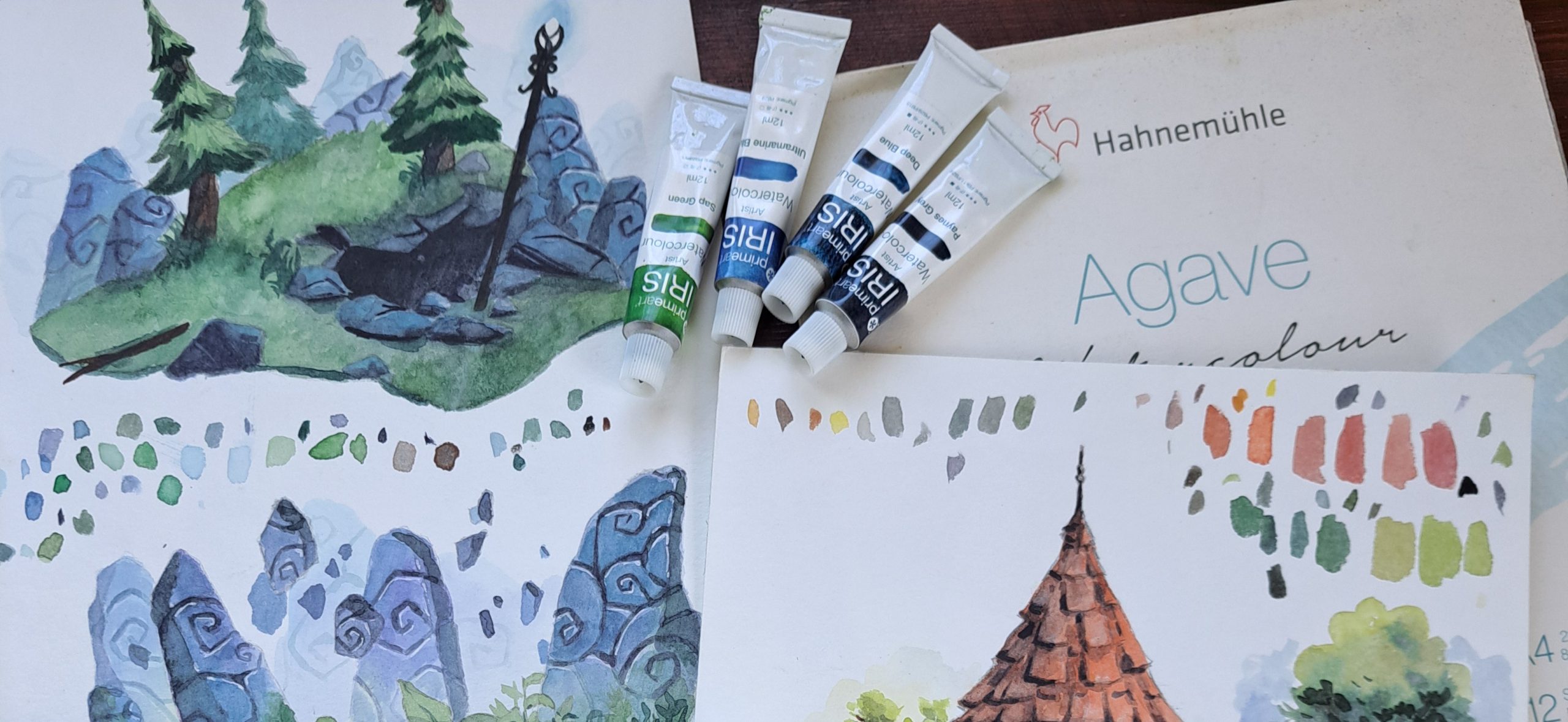
For the books and tutorials, you recommend certain materials to your readers. Which Hahnemühle papers would you particularly recommend and why?
My most favorite Hahnemühle paper right now is the Agave Watercolour paper. I discovered it through one of my experiment sessions, and absolutely fell in love with the way the finished illustration looked. There is texture on this paper that gives a watercolor illustration this old, nostalgic feeling, like the fairytale illustrations of vintage books. Besides that, the paper is thick and holds many layers of water without buckling, which is essential for any artist using watercolor mediums. I used this paper for the majority of the artworks for Watercolor Wizardry, and would recommend it to anyone especially if they love the look of old fairytale illustrations.
What advice would you give to artists who are just starting their own artistic journey?
My biggest advice to any creative person is to always follow your fascinations. An artist’s unique fascinations, something they’re obsessed with or attracted to without knowing why, is their inner artistic voice. As artists our task is to distill reality from our point of view, which is unique to an individual. No two people perceive the world in the exact same way. So to anybody starting out, I would tell them to cut out the external noise, focus on that inner voice that gets excited when you see your favorite butterfly, or color, or whatever it is that fascinates you. And follow that feeling all the time, everywhere. Keep a sketchbook and draw everything that fascinates you. Over time you will develop your unique artistic voice.
Finally, are there any new ideas or projects you are currently working on that you would like to share with us?
Yes! I am currently working on yet another worldbuilding project compiled in the form of a book. This book will explore the world of the parrot wizards I’ve been drawing for almost 2 years now, inspired by my own Indian ringneck bird. So far I’ve done writing for the book regarding the parrot wizards’ magic system, the layout of their world, where they get their magic from, and why they do what they do. Most importantly, what their chaotic adventures entail. I am having so much fun so far with this book, it’s truly my deepest passion project right now and I find myself immersed in this world every day, writing up new adventures. I’ve been pushing myself to my best abilities to create detailed illustrations for the book. I would love for it to be the kind of book somebody could spend hours and hours paging through. I don’t know when or where it will be published right now, but I hope people will enjoy the adventure when it is released.
Wow, that sounds wonderful! Thank you, Kiara, for this inspiring insight into your creative world. Your passion for storytelling and illustration truly shines through – and makes you want to pick up a brush yourself and dive into new worlds. We wish you continued success and look forward to following you and your projects in the future.